
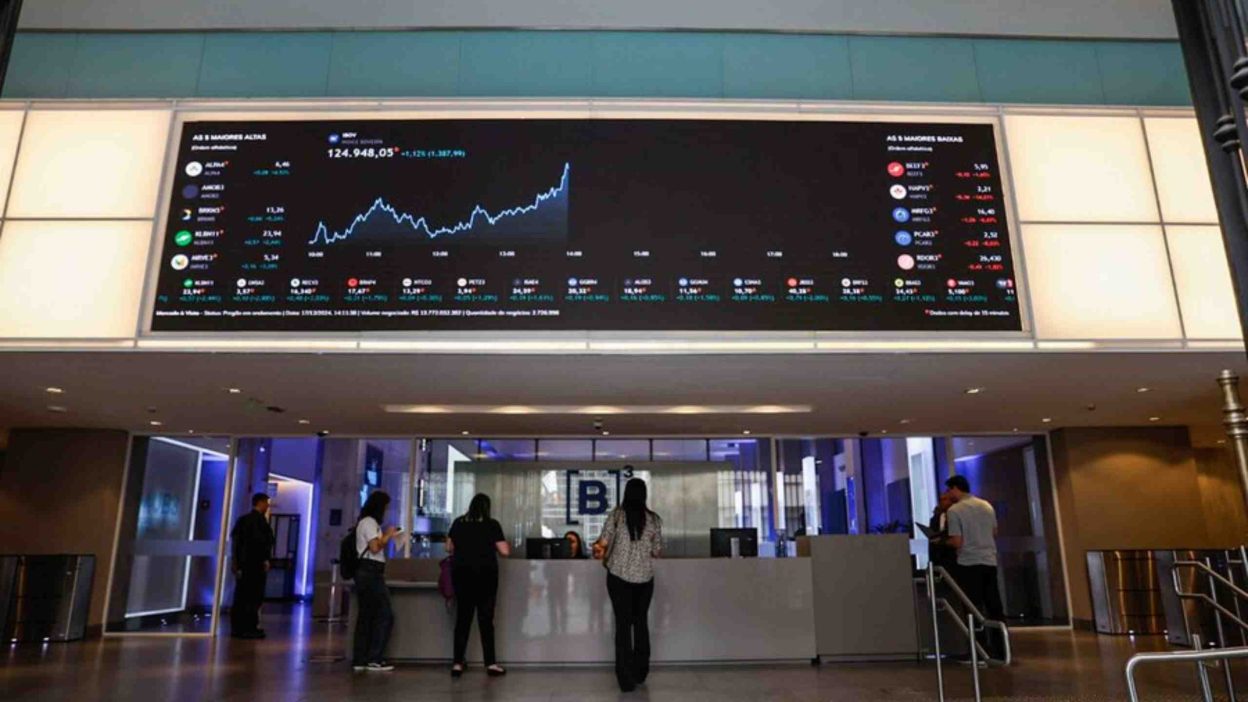
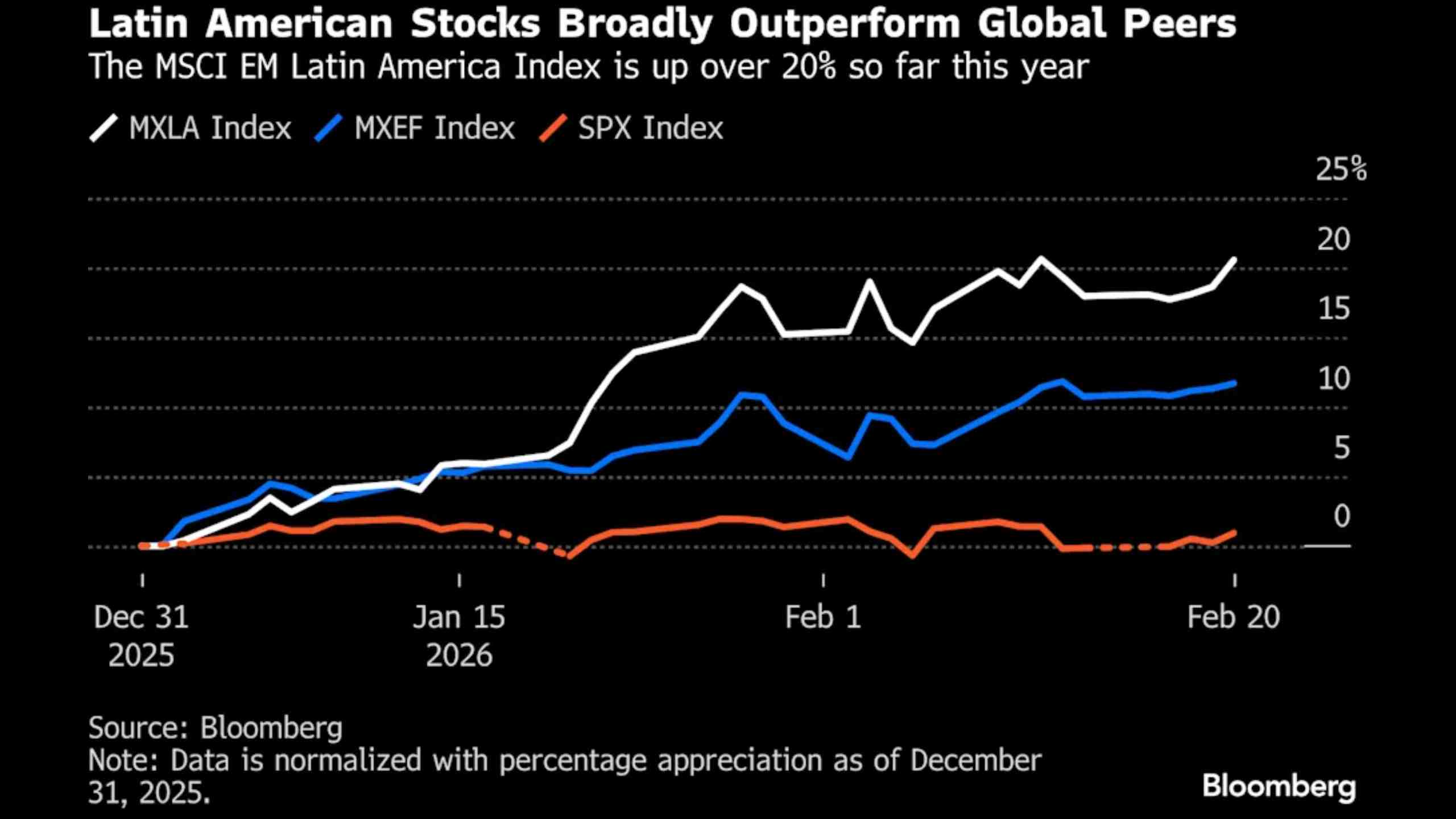
Global financial flows are shifting. In early 2026, Latin American stock markets started the year with unusually strong performance, fueled not by domestic factors alone, but by significant foreign cash inflows.
This trend matters for everyday Americans, too, especially those considering global diversification or watching how capital rotates into regions outside the U.S. equity market.
Why Is This Happening?
In January 2026, investors around the world increased purchases of stocks in Brazil, Mexico, and Colombia more than they had in recent years. Regulators in those markets reported the highest foreign buying activity seen in at least four years, driving regional indexes higher. This global demand for emerging market assets is a key factor behind what financial data show as a historic start to the year for these markets.
Several influences are at play:
Global investors seeking returns beyond developed markets
Attractive valuations in Latin American equities versus expensive U.S. counterparts
Anticipation of political and economic reforms in key Latin American countries
Current Market Snapshot
| Region | Foreign Buying Activity | Notable Trend |
|---|---|---|
| Brazil | Very High (4-year peak) | Capital rotation from developed markets |
| Mexico | Strong inflows | Growing investor confidence |
| Colombia | Elevated foreign interest | Election-driven repositioning |
(Estimates are based on regulator flow reports and Bloomberg coverage.)
Why It Matters to Americans
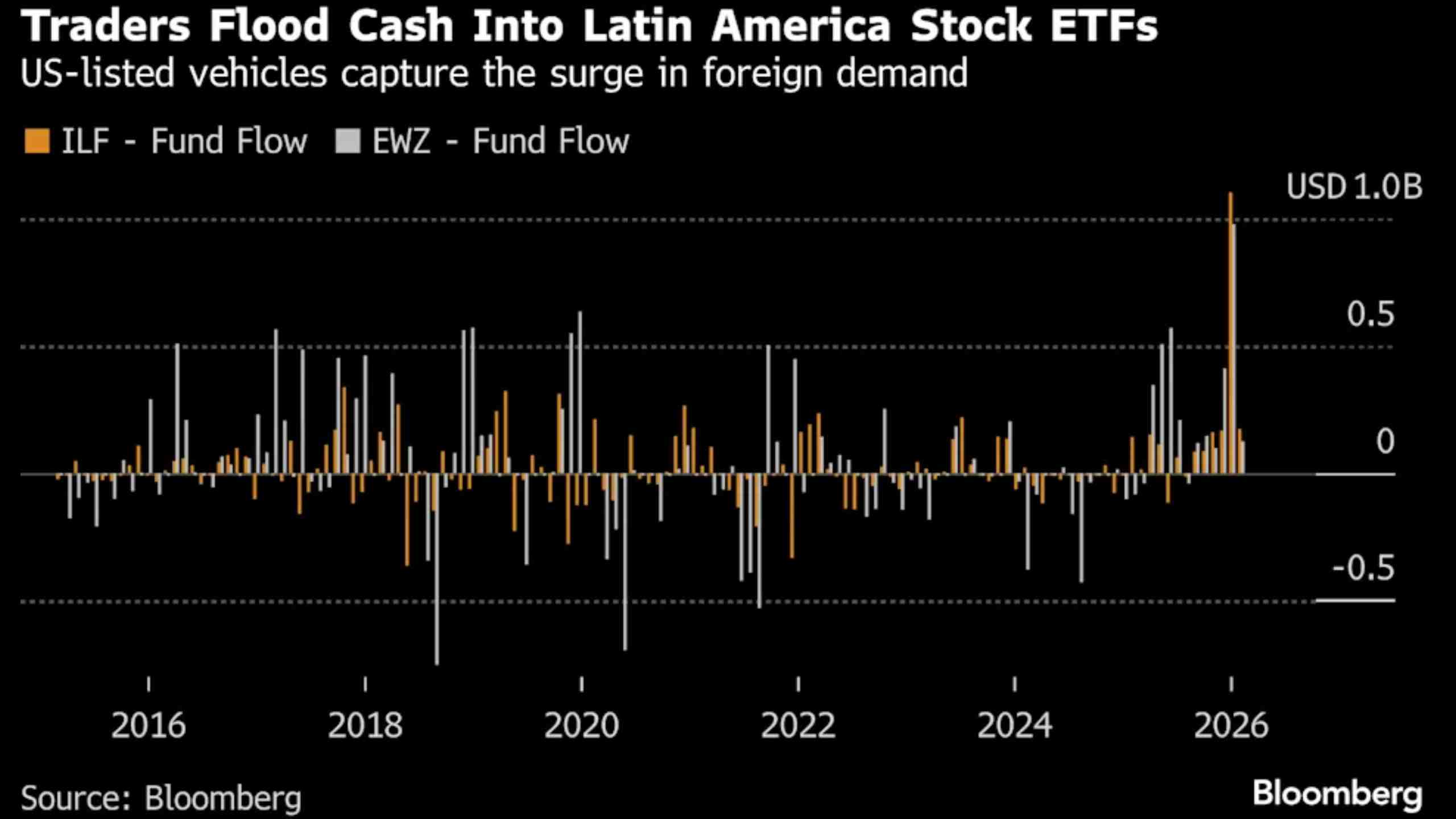
Many U.S. financial products, like global equity funds, international ETFs, and mutual funds, hold exposure to emerging markets. When regions like Latin America see strong cash inflows, it can:
Improve performance for diversified portfolios
Affect relative returns compared to U.S.-only stock holdings
Influence currency and commodity price movements tied to those economies
For example, strong inflows into Brazil often correlate with higher demand for commodities, a sector that influences U.S. inflation metrics and some employment sectors indirectly.
Transatlantic Trade Tensions: EU Insists U.S. Keeps Agreed Tariff Cap After Supreme Court Ruling
Stock market today: Tariff Fallout Highlights
Key Comparisons
U.S. vs Latin America Market Inflows (General Patterns)
| Feature | U.S. Equity Markets | Latin American Markets |
|---|---|---|
| Valuation Levels | Higher on average | More moderate |
| Foreign Investor Interest | Stable | Recently increasing significantly |
| Liquidity | Deep and broad | Smaller but rising |
| Risk Profile | Lower volatility overall | Higher cyclical risk |
(This table highlights general structural differences and does not imply investment guidance.)
Near-Term Outlook (Informational Only)
Economists view rising global cash flows into emerging markets as a signal of risk appetite outside traditional developed markets. However, this could be sensitive to:
U.S. interest rate changes
Currency volatility
Political transitions in Latin American countries
None of these variables can be predicted with certainty, and past performance is not a guarantee of future results.
Practical Takeaways (Educational, Not Advisory)
Global diversification matters: Cash flows into foreign equities can influence broad market performance.
Volatility can be higher: Emerging market moves tend to be more dramatic than U.S. averages.
Cross-market data signals appetite shifts: Tracking foreign buying trends helps understand where global capital is moving.
Conclusion
Global cash flows are shaping market dynamics in ways that go beyond any single economy. The historic start seen in Latin American stock markets reflects deeper shifts in global investor behavior. While not a forecast, these trends are worth noting for anyone tracking global financial conditions and how capital seeks returns across borders.
Frequently Asked Questions
What does “cash inflows” mean?
Cash inflows refer to foreign or institutional money being invested into a market’s stocks or assets. Higher inflows can help drive asset prices upward.
Are Latin American stock markets outperforming the U.S.?
In early 2026, Latin American markets have recorded stronger relative gains, largely supported by foreign investor capital rather than long-term structural shifts.
Does this affect U.S. markets directly?
Global capital flows can influence U.S. markets indirectly through currency movements, commodity prices, and overall risk sentiment, but U.S. fundamentals remain key drivers.
Is this a short-term rally?
It is too early to determine whether the trend will persist. Capital flows can shift quickly based on economic data, policy decisions, and geopolitical developments.
Should everyday investors react?
Every investor’s situation is different. This FAQ provides context for understanding market trends and does not constitute financial advice.