U.S.–EU trade relations have entered a volatile phase following a recent U.S. Supreme Court decision that affected presidential tariff powers. Ordinary Americans may not notice international trade headlines, but tariff uncertainty can influence prices, jobs, and global supply chains that affect U.S. businesses and consumers.
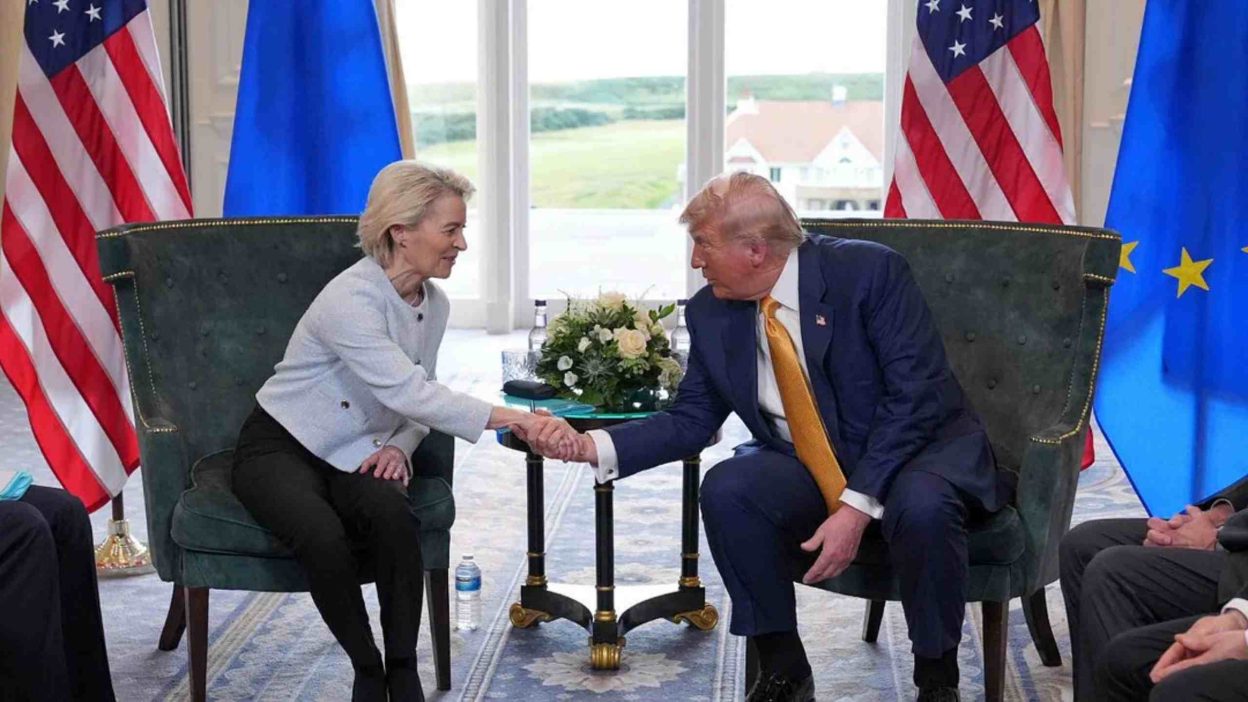
At the heart of the matter is a trade agreement reached between the United States and the European Union last year that set new tariff rates on many goods. After legal pushback, the EU has publicly stated it will accept no increase in U.S. tariffs beyond what was agreed.
Understanding this developing situation helps U.S. readers grasp how political and legal decisions abroad can ripple through markets at home.
Why This Is Happening

Legal Background
The U.S. Supreme Court recently struck down a legal basis the president was using to impose broad tariffs.
In response, the U.S. announced temporary tariffs, first at 10%, then raised to 15% on many imported goods.
What the EU Says
The European Commission has called on the U.S. to honor the terms of a 2025 trade agreement.
That deal included a 15% tariff ceiling on most European exports and zero tariffs on some products like aircraft parts.
EU officials said “a deal is a deal,” rejecting any tariff increases beyond the agreed limits.
Current Trade Terms Snapshot
| Trade Element | Agreed Terms (2025) | Recent U.S. Action |
|---|---|---|
| Maximum tariff on most EU goods | 15% | Confirmed but contested |
| Tariff on select goods (e.g., aircraft parts) | 0% | Not directly affected |
| EU expectations | No increases beyond the deal | U.S. raised temporary tariff |
| Legal trigger | The court ruling changed the authority | Administration response |
Data based on public EU and U.S. statements.
Why It Matters to American Consumers and Businesses
- Supply Chain Costs
Tariff changes can raise import costs for U.S. businesses that depend on European inputs. That can filter into the prices consumers see. - Global Market Confidence
Uncertain or unpredictable tariff policy can spook investors and affect U.S. financial markets indirectly. - Export Dynamics
If the EU pushes back on the trade deal or delays approval, U.S. exporters may face market access risks.
Near-Term Outlook
This is not a prediction, but here’s the informational landscape:
Negotiations between U.S. and EU trade officials are ongoing.
The EU is seeking clarity and commitment to the existing deal, not new tariff hikes.
Some EU lawmakers have signaled they may slow or pause approval processes until more certainty exists.
The broader context includes global supply chains, Inflation dynamics, and ongoing U.S. political debates about trade policy.
Practical Takeaways (Educational Only)
International tariffs can affect goods costs even inside the U.S. economy.
Trade agreements contain legal commitments that shape how countries do business with each other.
Uncertainty in trade policy can contribute to market volatility and planning challenges for global companies.
Conclusion
The European Union has made it clear it will not accept increases in U.S. tariffs beyond what was previously agreed in a 2025 trade deal after a Supreme Court ruling changed the legal footing for tariff policy. This transatlantic standoff highlights how legal, political, and economic forces intersect, and why U.S. consumers and businesses may feel the consequences even if trade headlines seem distant.
Frequently Asked Questions
What triggered this trade disagreement?
A recent U.S. Supreme Court decision altered the legal basis for certain
tariff authorities, prompting new temporary tariff measures and renewed
trade tensions.
What is the core demand from the EU?
The European Union has stated that the United States should adhere to
previously agreed tariff ceilings and avoid additional increases.
Could tariffs impact U.S. prices?
In theory, higher tariffs on imported goods can raise costs for businesses,
which may eventually be passed on to consumers through higher prices.
Is this resolved?
Negotiations are ongoing, and uncertainty remains as both sides continue
discussions regarding tariff policy and trade terms.