Market Overview
U.S. stock futures, Dow, S&P 500, and Nasdaq, are slipping in early trading after a weekend of policy news that introduced fresh uncertainty for markets.
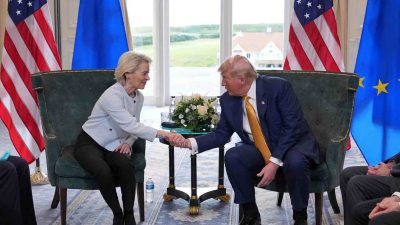
The move comes amid new tariff measures announced by the U.S. administration and stalled geopolitical negotiations with Iran that have kept risk sentiment elevated among traders.
Geopolitical reports show Iran-U.S. talks are scheduled to resume soon, keeping markets sensitive to potential escalation risks.
Why Markets Are Reacting
1. Tariff Policy Shifts
• After the U.S. Supreme Court struck down much of the previous tariff authority, the administration announced fresh global tariffs of around 15% on imports, which surprised markets.
• Traders are now pricing in policy ambiguity, not just the tariffs themselves, but uncertainty about how and when they will be implemented.
• Reporting also shows China urged the U.S. to cancel unilateral tariffs following the court ruling, adding to geopolitical friction.
Broader Risk Factors
2. Geopolitical Tension
• Iran-U.S. diplomatic engagement is poised to continue this week, but markets remain wary.
• Energy markets have been sensitive to these developments, though recent reports show oil prices sliding modestly as talks reduce fears of broad conflict.
Market Signals to Watch Today
Futures Performance (Approx.)
(Note: figures are market-indicative and may shift throughout the session)
| Index Futures | Movement |
|---|---|
| Dow Jones | Lower |
| S&P 500 | Lower |
| Nasdaq | Lower |
| U.S. Dollar | Weakening |
| Bitcoin (crypto) | Down |
What Investors Are Watching This Week
Markets now have multiple catalysts piling up, including:
Big tech earnings (e.g., Nvidia, Salesforce) can sway risk appetite.
Economic data on jobs and inflation, which will influence interest-rate expectations.
Tariff details and trade policy clarity, which remain unresolved and significantly influence sentiment.
Contextual Notes
• Recent volatility follows earlier rallies after the Supreme Court decision invalidated broad tariff authority — but markets are oscillating as new policy is introduced.
• Bitcoin and risk assets have shown weakness alongside dipping futures, while traditional safe havens like gold have seen relative strength in recent sessions (per broader market coverage).
What This Means for American Markets
This slump in index futures reflects short-term risk aversion rather than structural trend changes. It highlights how policy uncertainty, especially around tariffs and geopolitics, can move markets even without major economic shocks.
Key Takeaways
U.S. stock futures are down on tariff and geopolitical concerns.
Tariff policy ambiguity and legal uncertainty are major drivers today.
Geopolitical talks with Iran add to market sensitivity.