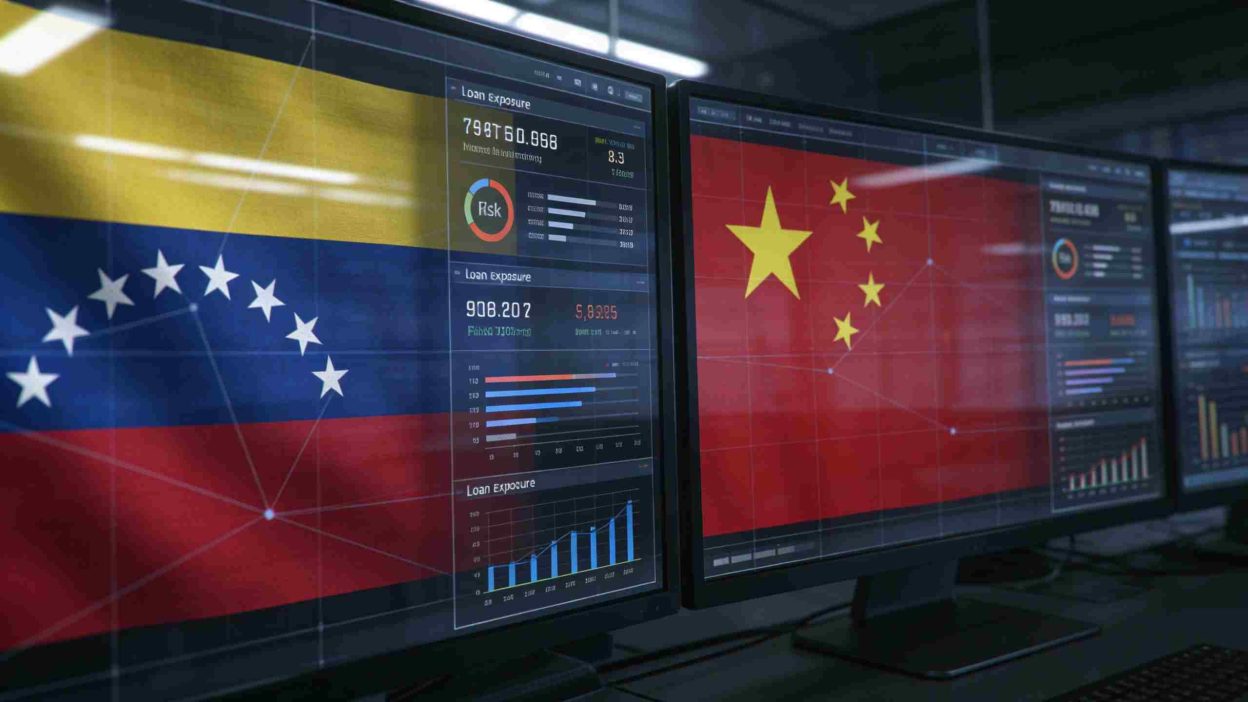
China’s top financial regulator has asked major state-backed lenders and commercial banks to report their exposure to loans tied to Venezuela following recent geopolitical events involving the South American nation. The move reflects Beijing’s growing concern about how heightened geopolitical tensions could affect its financial system and cross-border lending risks.
This step is significant because China has long been one of Venezuela’s biggest lenders, and changes in Caracas’s political landscape, including recent U.S. actions, have pushed regulators to reassess potential risk exposure.
Why This Is Happening
China’s National Financial Regulatory Administration (NFRA) instructed major policy banks and commercial lenders to report their Venezuela-related lending and to strengthen monitoring of risk tied to those credits. This comes in response to geopolitical developments that have increased uncertainty around Venezuela’s government and debt obligations.
For years, China extended billions of dollars in loans to Venezuela, often under oil-for-loan agreements where repayments were linked to future oil deliveries. These long-standing credit relationships mean that instability in Venezuela could pose financial risks to Chinese banks if repayment conditions worsen.
Analysts warn that rising geopolitical tension could increase global financial risk, especially after recent U.S. actions linked to Venezuela.
Current Exposure Snapshot
| Aspect | Details |
|---|---|
| Regulator | China’s National Financial Regulatory Administration |
| Institutions Involved | Policy banks (e.g., China Development Bank), major lenders |
| Task | Report lending exposure to Venezuela |
| Focus | Risk monitoring of Venezuela-related credit |
| Context | Geopolitical uncertainty after U.S. involvement in Venezuelan leadership |
This directive is meant to give regulators a clearer picture of risk concentrations before any potential stress emerges in the banking sector.
Why It Matters to Americans
1. Global Financial Interconnections: China’s request shows how geopolitical events in one region, such as Venezuela, can prompt financial oversight actions in another major economy, signaling deep cross-border ties in credit markets.
2. Economic Risk Awareness: When regulators push banks to disclose and monitor exposure, it suggests heightened risk sensitivity, not just political rhetoric. This signals broader concern among global financial authorities about spillovers from geopolitical conflict onto financial stability.
3. Oil-Linked Credit Markets: Venezuela has been a major source of credit for China under energy-backed arrangements. If repayment becomes more difficult due to political or economic disruption, lenders may face losses or be forced to provision for bad debt, a dynamic that can ripple through global banking risk assessments.
How China Is Responding
China’s move isn’t purely regulatory. It also ties into Beijing’s diplomatic posture. At the same time that banks were asked to report and monitor exposure, China’s foreign ministry strongly criticized U.S. actions, underscoring the political dimensions of the financial step.
Broader Geopolitical and Financial Context
China’s lending to Venezuela peaked over the past decade under loans-for-oil agreements, with much of the credit extended by policy banks like the China Development Bank. These deals were central to China’s engagement in Latin America but now represent potential risk if Venezuela’s ability to meet obligations weakens.
Practical Takeaways
Regulators want transparency: Banks’ reporting exposure helps regulators and markets assess where credit risk may be concentrated, especially in geopolitically sensitive loans.
Credit risk monitoring is rising: Financial authorities are increasingly watching cross-border credit ties as geopolitical uncertainty grows.
Global risk awareness: This event highlights how international politics and finance intersect, and why credit exposures matter for overall financial stability.
China’s financial authorities have told major banks to disclose their lending exposure to Venezuela in response to geopolitical tensions affecting Caracas. This action highlights how global credit ties, especially large loans made under oil-backed arrangements, can become focal points for regulatory risk monitoring when political events elevate uncertainty.
Frequently Asked Questions
Why is China asking banks to report exposure now?
Geopolitical developments, including U.S. actions involving Venezuela’s leadership, have raised concerns about potential financial risks linked to loans.
What kind of loans are involved?
Much of the credit to Venezuela has been oil-for-loan financing, where repayments are tied to oil exports.
Which banks are affected?
China’s policy banks, such as the China Development Bank, and major commercial lenders with foreign credit exposure to Venezuela are included.
Could this affect global markets?
Heightened monitoring may influence investor sentiment on emerging-market debt and cross-border credit stability.
Does this mean banks expect losses?
Not necessarily. The goal is to assess and monitor risk, reflecting caution amid uncertainty rather than an expectation of losses.
China’s top banking regulator has asked major banks to disclose their credit exposure to Venezuela’s loans and strengthen oversight of that risk, a response to recent geopolitical events involving U.S. actions and concern about potential financial stress tied to long-term oil-linked credit.