
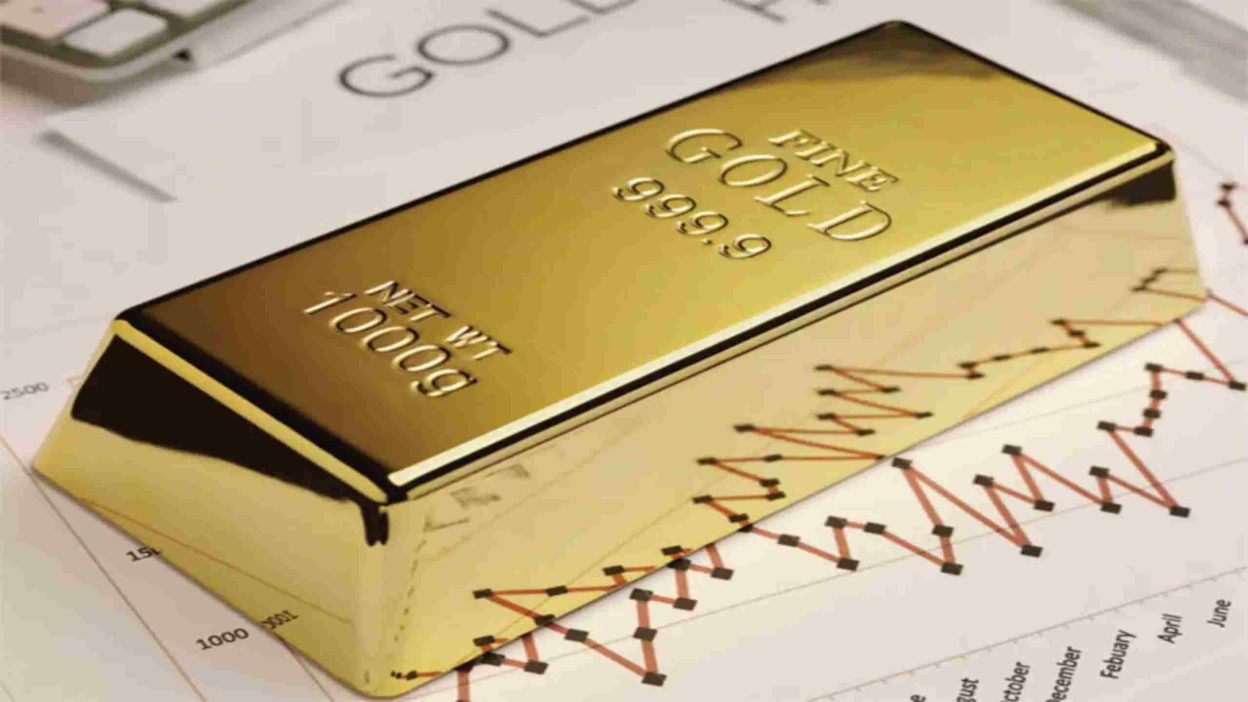
Gold has long been viewed in the United States and around the world as a safe haven asset that investors buy when markets are uncertain. Recently, however, gold’s price action has not looked like the slow, steady rise typical of a safe haven. Instead, prices have moved quickly up and down, resembling the trading patterns seen in meme stocks.
This changes how gold behaves in times of stress or excitement. Rather than acting as a calm store of value, gold’s trading style has begun to mirror riskier, speculative assets.
What Is Happening With Gold Prices
Recent Volatility and Price Swings
In early 2026, gold prices experienced unusual and dramatic moves. After rising sharply to record levels of nearly $5,000 per ounce, the metal plunged and rebounded in quick succession. These moves included the largest single‑day drop on record, followed by rebounds that resemble the price action seen in stocks with strong speculative momentum.
This level of price variation is not typical for a traditional safe haven, which usually moves gradually and in relation to broader market fears or inflation expectations.
Comparison With Cryptocurrency and Meme Stocks
Like some meme stocks, gold’s recent price chart showed extremes on both the upside and downside within short time frames. That type of pattern often reflects heavy speculation and fast trading activity, rather than steady flows into a classic protective asset.
Some analysts note that this kind of trading behavior can detach gold’s price from its fundamental role as a store of value, making its movements harder to interpret as signals of economic stress or stability.
Market Data Snapshot
| Metric | Recent Movement |
|---|---|
| Year to date price change | About up 14 percent (through early February) |
| Recent weekly volatility | Higher than typical safe haven behavior |
| Record levels hit | Prices near $5,000 per ounce |
These numbers show that gold has delivered strong returns recently, but with price swings that are unusually large for a traditional safe haven asset.
Why This Is Happening
Investor Sentiment and Speculation
Sharp price swings in gold partly reflect shifts in investor sentiment. Some market participants treat gold not just as a hedge against uncertainty but as a momentum or speculative play. This can amplify price movements as traders jump in and out of positions quickly based on short‑term trends rather than long‑term hedging goals.
Broader Market Turmoil
Gold’s rapid swings have also coincided with volatility in stock and cryptocurrency markets. When risk assets wobble, traders sometimes rotate capital across asset types in large volumes. That can exaggerate movements in all markets, including traditionally stable ones like gold.
Monetary Policy and Macro Factors
Expectations about inflation, interest rates and central bank actions also affect gold prices. For example, fear of currency weakness can drive demand for hard assets, while expectations of rising interest rates can temper interest in non‑yielding assets like gold.
Why This Matters to Americans
Changing Safe Haven Profile
For many U.S. investors, gold has been a key part of diversification strategies because it traditionally performs well when stocks or bonds falter. If gold starts trading more like a speculative instrument, its reliability as a protective asset may be reduced, particularly over short time frames.
Implications for Portfolios
Volatility can affect portfolios that include gold‑linked funds or bullion. While long‑term demand might remain strong, the short‑term price action can introduce unexpected swings that complicate risk management.
Economic and Geopolitical Signals
Historically, gold has been used to signal growing uncertainty in markets or geopolitics. When its movement reflects speculative behavior more than fear‑driven buying, interpretations of market signals become less clear.
Bottom Line
Gold’s price behavior in 2026 shows patterns that resemble speculative trading, with rapid gains and losses similar to meme stock action. While gold still holds appeal as a store of value for long‑term investors and central banks, its recent trading style challenges its traditional safe haven label. Investors should recognize that gold’s price can move sharply for reasons beyond classic demand for stability and wealth preservation.
Frequently Asked Questions
Why is gold considered a safe haven?
A safe haven asset tends to hold or gain value when risk assets like stocks fall. Gold has historically served this role during periods of market stress.
What does it mean that gold is trading like a meme stock?
This means gold’s price is showing large, rapid movements that resemble speculative trading patterns rather than slow, steady demand typical of a safe haven.
Does this mean gold is no longer a safe haven?
Not necessarily. Gold can still act as a long-term store of value, but its short-term price behavior may be highly volatile and influenced by speculation.
Are other safe haven assets acting similarly?
Some other assets, including certain commodities and cryptocurrencies, have also shown volatility, though each behaves differently under market stress.
Gold’s price has risen strongly in 2026 but with unusually large swings. This trading pattern makes gold look more like a speculative, chart‑driven asset than a traditional safe haven, reflecting changes in investor behavior and market conditions.