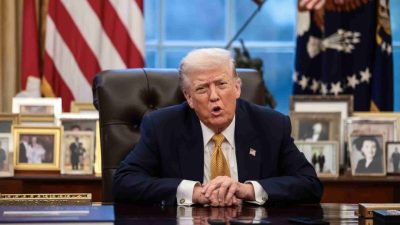
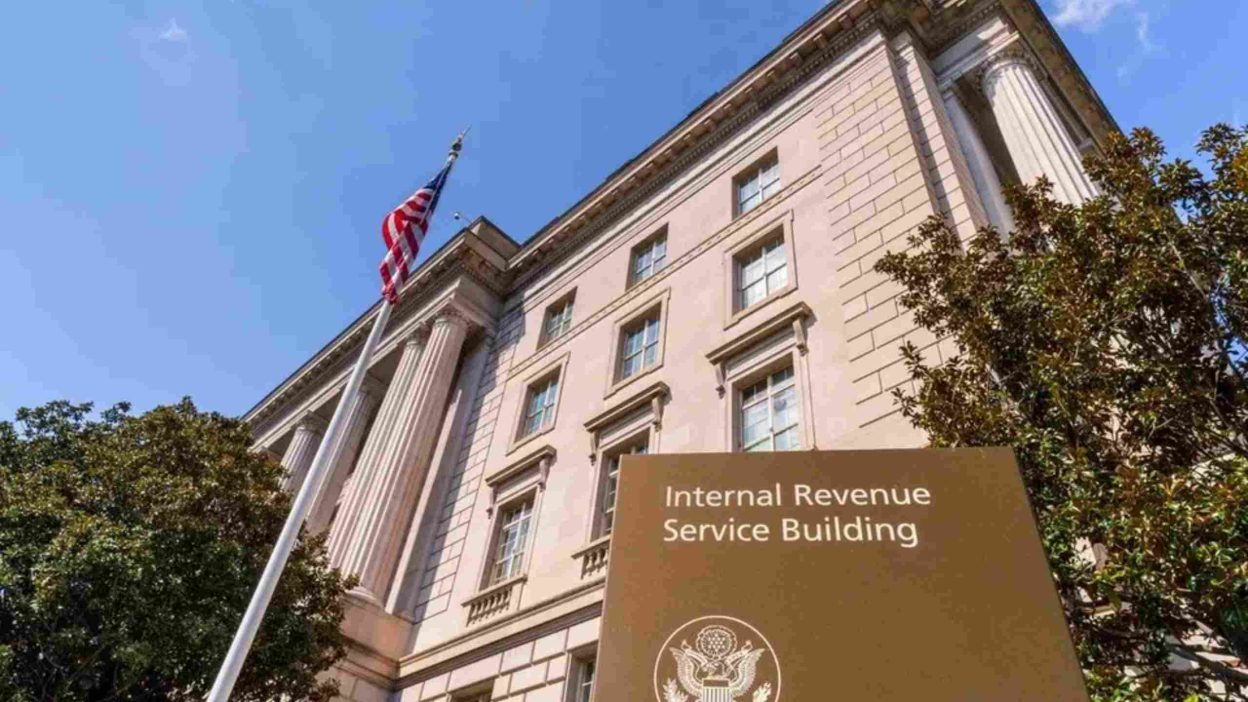
President Donald Trump and his family filed a $10 billion lawsuit against the Internal Revenue Service (IRS) and the U.S. Treasury Department, claiming the agencies failed to protect confidential tax information and allowed it to be leaked to media outlets. The suit, filed in a federal court in Florida, adds a major legal claim to ongoing controversies about government handling of sensitive data.
The case centers on tax returns from Trump’s first term that were disclosed in 2019 and 2020. Trump says the leaks caused reputational harm and financial damage to him, his adult sons, and the Trump Organization.
This legal action has drawn widespread attention because it involves a sitting U.S. president suing parts of his own government.
Why This Is Happening
Trump asserts that federal agencies responsible for safeguarding tax records failed in their duty to prevent unauthorized disclosures. He claims the leaks were caused by a former IRS contractor, Charles Edward Littlejohn, who pleaded guilty in 2024 to illegally leaking tax information to The New York Times and ProPublica.
The lawsuit alleges the disclosures caused “reputational and financial harm,” “public embarrassment,” and negatively affected Trump’s standing among voters, particularly in the 2020 election. Trump, his sons Donald Trump Jr. and Eric Trump, and the Trump Organization are all named as plaintiffs.
Legal Claims and Context
The lawyers for Trump argue that the IRS and Treasury did not take “mandatory precautions” to protect confidential tax return information from unauthorized access and disclosure. They seek $10 billion in damages for harm caused by the releases of the tax records.
The case points to one of the strictest confidentiality laws in U.S. tax code, IRS Code Section 6103, which is designed to protect taxpayer information. Violations of this code are taken seriously under federal law.
Current Snapshot of the Case
| Aspect | Details |
|---|---|
| Plaintiffs | Donald Trump, Donald Trump Jr., Eric Trump, Trump Organization |
| Defendants | Internal Revenue Service, Treasury Department |
| Court | Federal court in Miami, Florida |
| Damages sought | $10 billion |
| Basis of claim | Leak of confidential tax records |
| Contractor involved | Charles Edward Littlejohn (sentenced in 2024) |
The lawsuit is part of a broader pattern of legal actions involving Trump related to government investigations and public controversies.
Why It Matters to Americans
This lawsuit highlights ongoing debates about data privacy, government transparency, and accountability. Tax records of any U.S. taxpayer are among the most sensitive personal information held by the federal government. The case raises questions about how well federal agencies protect that data.
For taxpayers and citizens, the case also touches on how confidential information is handled and the legal responsibilities of government agencies when breaches occur. Given Trump’s high public profile and previous disputes over disclosure of his tax returns, the lawsuit is likely to attract significant legal and political attention.
Key Comparisons
| Topic | Relevance |
|---|---|
| Data privacy protections | Central to the legal claim |
| Government accountability | Focus of the lawsuit |
| IRS confidentiality rules | IRS Code Section 6103 governs tax data protection |
| Historical leaks | The 2019–2020 disclosures triggered this legal action |
The case follows a five-year prison sentence for the former IRS contractor responsible for the leaks, reflecting the seriousness of unauthorized disclosures under U.S. law.
Near-Term Outlook
The lawsuit is in early stages and will proceed through pretrial motions, possible discovery, and potential appeals. Claims for damages of this scale can take months or years to resolve in federal court. Whether the government will respond with motions to dismiss or other defenses remains to be seen. No outcomes are guaranteed.
As legal proceedings unfold, the case may lead to broader discussions about government data safeguards, enforcement of confidentiality laws, and consequences for federal agencies.
Practical Takeaways
Trump and his family filed a $10 billion lawsuit against the IRS and Treasury.
The suit focuses on ancient tax return leaks from 2019 and 2020.
Plaintiffs claim leaked information caused reputational and financial harm.
A former IRS contractor was already sentenced to prison for the leaks.
The case underscores federal responsibilities to protect sensitive taxpayer data.
Related reading explores how Trump’s stance on economic policy, including the U.S. dollar, is shaping current market discussions in Trump Embrace of a Weaker Dollar Explained.
Bottom Line
Donald Trump’s lawsuit against the IRS and Treasury for $10 billion over leaked tax records is a rare legal move that raises questions about government data security and accountability. For the broader U.S. public, the case highlights how confidential information is protected under law and the potential consequences when safeguards fail. As the lawsuit advances in federal court, it is likely to remain a topic of legal and political interest.
Frequently Asked Questions
What is Trump suing over?
Donald Trump is suing the Internal Revenue Service (IRS) and the U.S. Treasury,
alleging they failed to prevent the unlawful disclosure of his tax return
information to media organizations.
How much is Trump asking for?
The lawsuit seeks $10 billion in damages, citing reputational harm and violations
of federal confidentiality laws.
Who else is included as plaintiffs?
The plaintiffs include Donald Trump Jr., Eric Trump, and the Trump Organization,
alongside former President Trump.
What law protects tax return confidentiality?
Internal Revenue Code Section 6103 strictly limits the disclosure of federal tax
return information and is considered one of the strongest confidentiality
protections in U.S. law.
Has anyone been punished for the leak?
Yes. A former IRS contractor pleaded guilty to leaking confidential tax data and
was sentenced to five years in prison.
President Donald Trump and his family are suing the IRS and Treasury for $10 billion, claiming the agencies failed to protect confidential tax returns that were leaked to media outlets, causing reputational and financial harm.