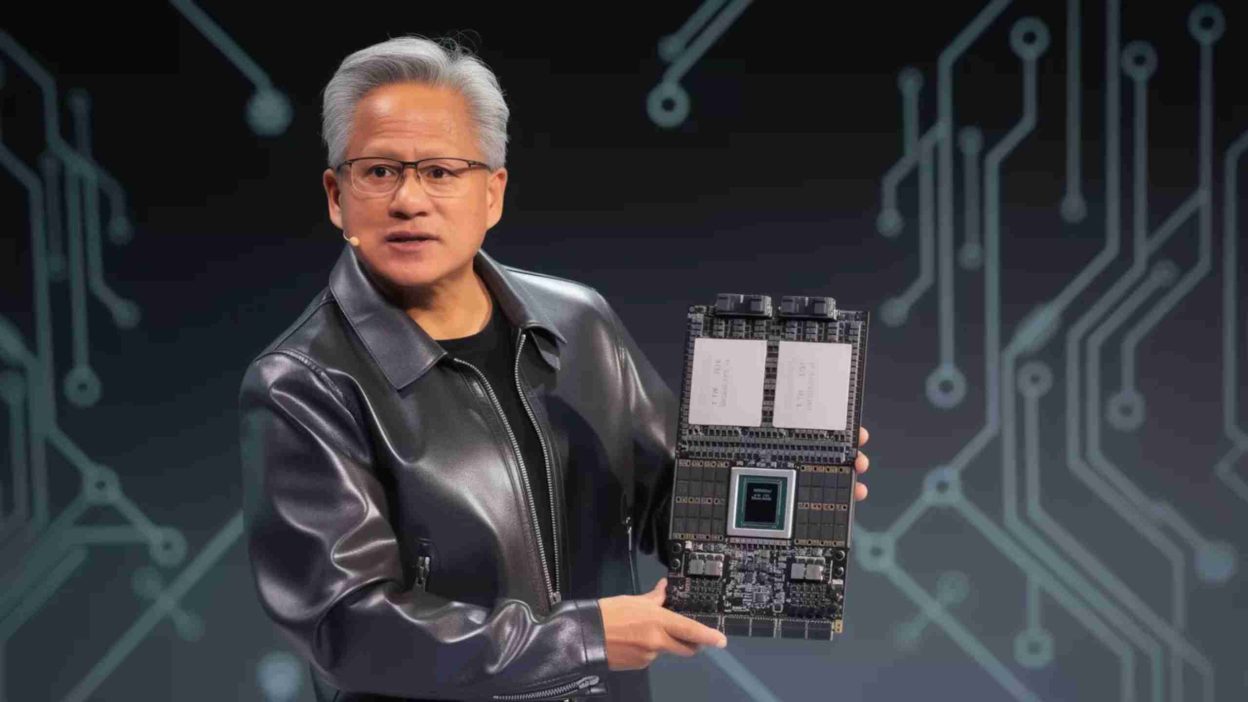
At CES 2026 in Las Vegas, Nvidia, one of the world’s leading AI hardware and software companies, unveiled its next-gen AI platform, called Vera Rubin. The new system combines multiple custom chips into a unified architecture designed to accelerate both AI training and inference workloads for large-scale models and enterprise use.
This announcement comes at a time when demand for heavy AI computing is rising rapidly, with hyperscalers, cloud providers, and advanced research labs all seeking faster, more efficient machine-learning infrastructure.
For U.S. businesses, developers, and tech professionals, this next-gen AI platform represents a major step in how artificial intelligence is deployed across data centers and applications.
Why Nvidia Is Launching Vera Rubin
Nvidia’s new Vera Rubin platform is a response to the exploding demand for AI compute, particularly for generative models, reasoning engines, and other advanced workloads that require high throughput and efficiency.
By integrating multiple specialized components, including a Vera CPU, Rubin GPUs, and advanced interconnect and storage chips, Nvidia aims to deliver performance significantly beyond its earlier Blackwell architecture.
This kind of innovation reflects the broader industry trend toward hybrid computing architectures, where AI inference and training are optimized together instead of separately.
What the Vera Rubin Platform Includes
Nvidia’s new platform blends several advanced components into a supercomputing-scale system:
Vera CPU, a powerful ARM-based central processor
Rubin GPUs, high-performance accelerators for training and inference
NVLink 6 Switch, ConnectX-9 SuperNIC, BlueField-4 DPU, Spectrum-6 Ethernet Switch, networking and data handling chips
Inference Context Memory Storage, storage optimized for long-context reasoning models
These combine to form systems like the Vera Rubin NVL72 server, which can be clustered into vast AI computers such as Nvidia’s DGX SuperPOD, platforms that companies like Microsoft, Google, Amazon, and Meta plan to deploy for future workloads.
By cutting inference token costs and GPU requirements compared with previous generations, Nvidia says the platform delivers much higher efficiency and lower total cost of ownership for AI workloads.
Why It Matters to Americans
1. Bigger, Faster AI Workloads
The Vera Rubin architecture is designed for the next wave of large-scale AI models, including reasoning systems and multimodal agents, which demand more compute than ever before.
2. Impact on U.S. Data Center and Cloud Markets
American cloud providers, including hyperscale services and enterprise AI platforms, rely on advanced hardware like Rubin to stay competitive globally. Wider deployment of these systems can improve performance for AI-driven applications used by businesses and consumers alike.
3. Economic and Innovation Impact
The Vera Rubin launch highlights the U.S. position at the forefront of AI hardware innovation, a sector that supports high-skill jobs in design, manufacturing, and software ecosystems.
Comparisons: Rubin vs. Previous Nvidia Platforms
| Feature | Grace/Blackwell | Vera Rubin |
|---|---|---|
| Integration | Traditional GPU/CPU stack | Six-chip co-designed AI superplatform |
| AI performance | Strong compute | Up to 4× GPU reduction, >10× lower inference costs |
| Scale | GPUs only | Rack-scale servers & SuperPOD systems |
| Cost efficiency | Higher TCO | Lower token costs, fewer GPUs needed |
| (Performance and efficiency estimates based on Nvidia’s published claims.) |
Practical Takeaways
AI workloads are scaling fast: Vera Rubin is built to handle the most demanding AI models with improved efficiency.
Enterprise impact is broad: Cloud providers and AI infrastructure teams will likely be among the first adopters.
U.S. tech leadership continues: Nvidia’s innovation underscores the United States’ pivotal role in AI hardware.
- While Nvidia’s Vera Rubin platform tackles massive AI workloads in data centers and cloud infrastructures, advancements in consumer and enterprise AI chips from other vendors are also reshaping hybrid AI computing across devices.
Nvidia’s next-gen AI platform, Vera Rubin, represents a major evolution in AI computing architecture, combining powerful CPUs, GPUs, networking, and storage into a unified system designed for high-efficiency training and inference. For businesses, developers, and data centers in the U.S. and around the world, this platform lays the groundwork for the next generation of AI innovation.
Frequently Asked Questions
What is the Vera Rubin platform?
It’s Nvidia’s latest AI computing architecture that integrates specialized hardware to run large-scale models more efficiently.
Why launch at CES 2026?
CES is a major global tech showcase where companies debut innovations that often shape industry direction for the year ahead.
How does it improve performance?
The platform combines multiple chips and optimized interconnects to reduce AI training and inference costs while increasing overall throughput.
Who will use it?
Early adopters are expected to include cloud providers, enterprises running large AI models, and research institutions.
When will it be widely available?
Nvidia expects broad deployment of the Vera Rubin platform in the second half of 2026.
Nvidia’s next-gen AI platform, Vera Rubin, unveiled at CES 2026, is a co-designed AI computing architecture built for efficiency and performance, marking a significant milestone in hardware for large AI models.