
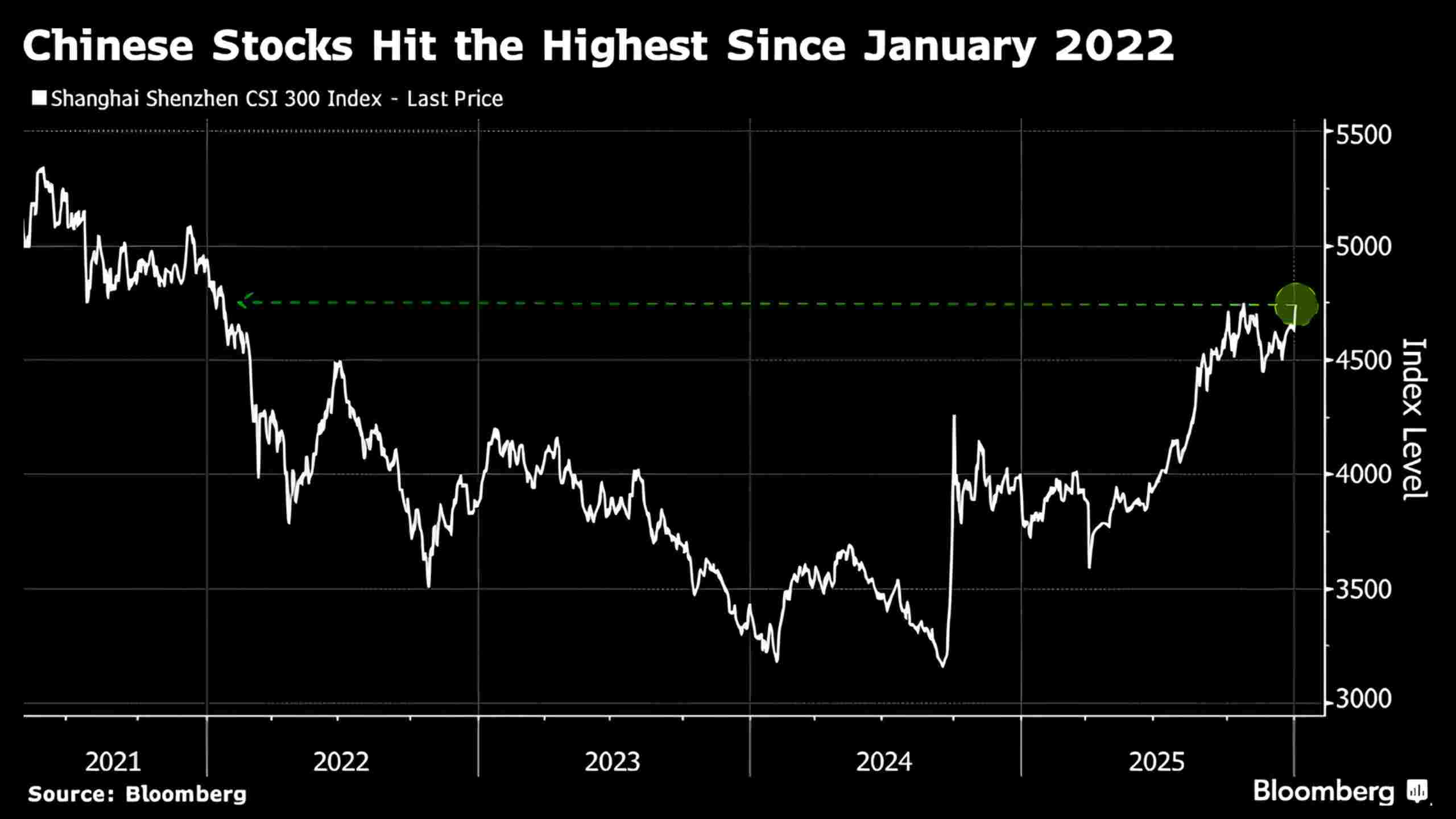
Chinese stocks have started 2026 on a strong note, climbing to their highest levels in four years as investor optimism builds around economic recovery and robust artificial intelligence (AI) sector gains.
The benchmark CSI 300 Index surged over 1%, while the Shanghai Composite Index also hit multi-year highs, lifting market sentiment.
For U.S. investors watching global markets, this rally shows how international equities can respond to economic indicators, policy support, and tech-sector leadership, even outside of domestic U.S. indexes.
Why This Is Happening
Several factors are driving the Chinese stock rally:
1. AI Sector Optimism
Recent breakthroughs and expanding AI innovation have buoyed technology shares in China, attracting both domestic and foreign investor interest and lifting broader market indexes.
2. Economic Signals and Policy Support
Positive assessments of manufacturing activity, early signs of economic stabilization, and discussions around economic recovery have improved market sentiment.
3. Asset Rotation into Tech and Materials
Investors are rotating capital into technology and materials sectors, where growth prospects appear stronger, contributing to broader price gains.
AI PC chips launch: AMD Unveils New Processors for On‑Device and Data‑Center AI
Current Market Snapshot
| Index | Recent Movement |
|---|---|
| CSI 300 Index | Up ~1.6% to four-year peak |
| Shanghai Composite | Up ~1.5%, highest since 2015 |
| Turnover | Elevated on strong trading volumes |
| Tech & AI stocks | Among the best performers |
These gains reflect a renewed appetite for buoyant risk assets in China, particularly in sectors tied to innovation and structural growth.
Nvidia Launches Vera Ratubin Next-gen AI platform at CES 2026
Why It Matters to Americans

1. Global Market Diversification Signals
U.S. investors often diversify portfolios globally. Episodes like this show how non-U.S. markets can generate returns when domestic markets lag or offer different risk-return dynamics.
2. Tech Sector Interconnectedness
China’s AI and tech sector performance can influence global supply chains and tech valuations, indirectly affecting U.S. equities with global exposure.
3. Investment Sentiment and Volatility
Strong rallies abroad can shift capital flows, influence currency values, and affect commodities demand, factors that U.S. investors watch for portfolio impacts.
Comparison: China’s Rally vs. Recent History
| Period | Market Condition |
|---|---|
| Early 2026 | Major indices at multi-year highs |
| 2025 Mid-Year | Strong A-share performance and tech gains |
| Pre-2019 | Occasionally mixed with policy intervention |
Tech-led momentum and breadth of gains suggest this is not an isolated move, though some indicators show portions of the market may be overbought.
Practical Takeaways
Chinese equities can outperform in cycles: Diversified investors may consider global exposure when markets show strong sector leadership and supportive sentiment.
Tech and AI gains underlie much of this rally: These themes resonate with global trends seen in other major markets.
Risk metrics matter: Momentum indicators suggest some markets may be technically overextended, a reason to watch volatility.
The Chinese stocks rally to four-year highs highlights renewed investor confidence in technology innovation and economic stabilization at the start of 2026. While caution around valuation and momentum remains prudent, the strong start illustrates how global markets can shift rapidly with catalysts like AI growth, trade optimism, and supportive policy signals.
Frequently Asked Questions
What does “four years high” mean?
It means key Chinese stock indexes such as the CSI 300 and Shanghai Composite are trading at levels not seen since around 2022.
Why are tech stocks leading the rally?
Technology and AI sectors typically attract growth capital and higher valuations, especially when innovation momentum and earnings expectations improve.
What are some risks to this rally?
Some technical indicators suggest parts of the market may be overbought, while global economic uncertainty could weigh on sentiment.
Can U.S. investors trade Chinese stocks easily?
Access varies by brokerage and region; many U.S. investors use ETFs or American Depositary Receipts (ADRs) for exposure.
Does this affect the U.S. stock market?
Global market movements can influence investor sentiment and capital flows, though direct effects depend on exposure and market linkages.
Chinese stocks have rallied to their highest levels in four years, driven by optimism around AI growth, economic signals, and strong trading activity, offering insight into global equity market themes at the start of 2026.