
President Confident EU Won’t Walk Away Over Greenland
President Donald Trump downplayed concerns that his controversial tariffs tied to Greenland negotiations could unravel the recently agreed U.S.–EU trade deal, saying he doubts European leaders would jeopardize investment pledges and cooperation even amid deepening tensions.
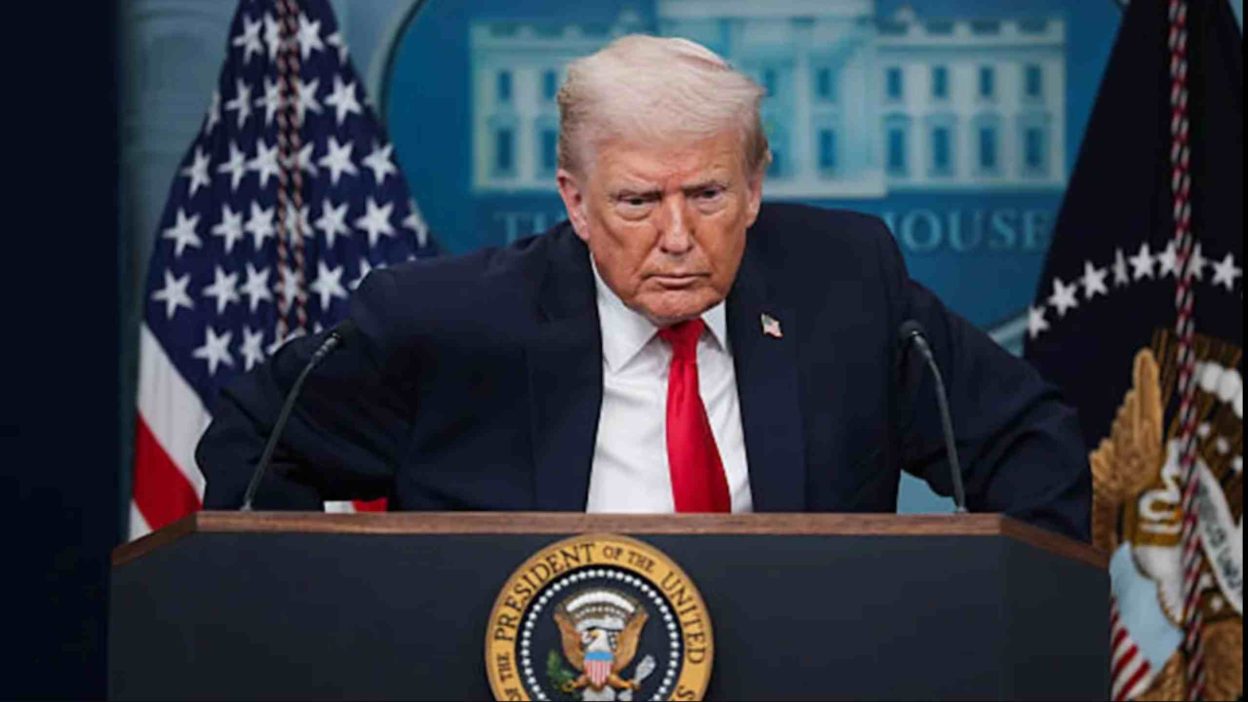
Trump made the remarks at a rare White House briefing ahead of his departure for the World Economic Forum in Davos, where he will face criticism from European leaders upset by his push to secure control of Greenland, a semi-autonomous Danish territory and NATO ally.
What Trump Said and Why It Matters
Comments on Trade and Tariffs
• Asked if Greenland-related tariffs could derail the U.S.–EU trade agreement, Trump responded, “I doubt it,” asserting the EU “needs that agreement very badly with us” and fought hard to secure it.
• He announced a 10 % tariff on goods from eight European countries starting Feb. 1, increasing to 25 % by June unless Greenland talks advance.
• When pressed on his next steps on Greenland, Trump told reporters, “You’ll find out.”
Trump also shrugged off European talk of retaliatory trade measures and hinted he could “meet it, and it will go ricocheting backward,” suggesting any counter-tariff actions would be matched by the U.S.
Trump Escalates Transatlantic Trade Clash With 200% Champagne Tariff Threat
European Pushback and Diplomatic Fallout
European officials have sharply criticized the tariff threats and Trump’s coercive approach:
• EU leaders called the tariff plan a mistake that could violate the spirit of last year’s trade deal and undermine trust among long-standing allies.
• European Commission President Ursula von der Leyen described the situation as serious and emphasized that “a deal is a deal” — warning that European investments are tied to commitments in the trade agreement.
• In response, the EU is reportedly preparing Arctic security assistance and economic initiatives for Greenland, reinforcing its partnership with Denmark and pushing back against unilateral U.S. pressure.
Why This Transatlantic Rift Matters
Trade, Security, and NATO
Trump’s stance ties economic measures to geopolitical demands, accelerating a rift with allies in Europe:
• Georg Geopolitical observers say interfering with trade cooperation and alliance unity could have far-reaching consequences for NATO cohesion and global economic integration.
• European leaders have signaled they are willing to consider retaliatory economic responses if Trump follows through, potentially triggering a tit-for-tat trade conflict.
• The dispute also intersects with broader debates over Arctic security and sovereignty, as the EU pushes back against any perceived U.S. attempt to control Greenland.
Near-Term Outlook
• Davos will be a flashpoint, and European leaders and Trump will directly address these issues, shaping diplomatic tone and economic risk perceptions.
• If Europe activates trade countermeasures or revisits investment pledges, the U.S.–EU trade agreement could face delays or strain.
• Markets could react to continued uncertainty in trade policy, particularly if tariffs expand or if NATO partners publicly break with the U.S. approach. (market context)
Practical Takeaways
• Trump is publicly confident that Greenland-linked tariff threats won’t derail the U.S.–EU trade deal — a view contested by European officials.
• The administration has announced tariffs on goods from eight European countries tied to Greenland negotiations.
• European leaders describe the tariff approach as a mistake and are preparing diplomatic and security responses.
• Transatlantic tensions over trade, sovereignty, and alliance unity are rising ahead of key international meetings.
Content Summary
• Trump said he “doubts” Greenland tariff threats will undo a U.S.–EU trade deal.
• He announced tariff increases on eight European countries tied to Greenland negotiations.
• European leaders have criticized the approach and are preparing responses.
• The dispute could affect trade cooperation, NATO unity, and diplomatic relations.