Why This News Matters to the U.S. Investors
Tesla’s supply chain decisions don’t just affect one company; they ripple across the entire electric vehicle market.
When a South Korean battery materials supplier revealed that a multi-billion-dollar supply deal with Tesla dropped to just a few thousand dollars, it raised serious questions. Is demand slowing? Is Tesla changing suppliers? Or is this a warning sign for EV investors?
Let’s break it down in simple terms.
What Happened Between Tesla and L&F?
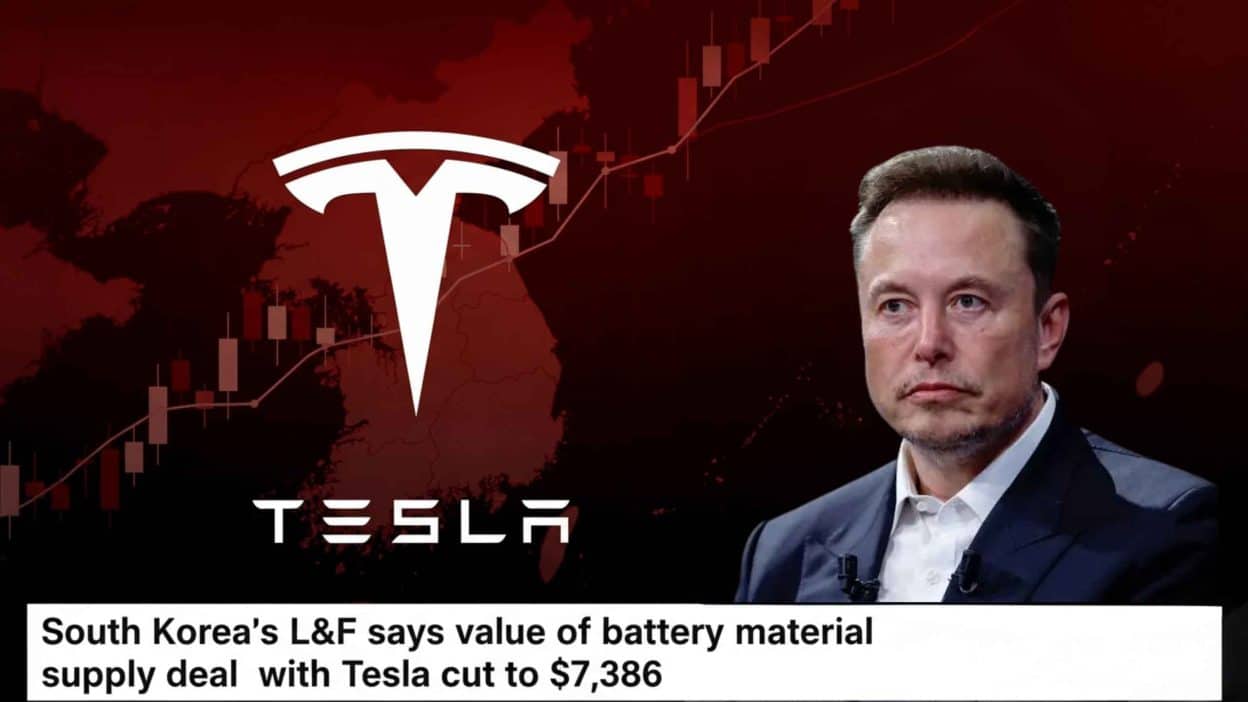
South Korea’s L&F, a major battery cathode materials maker, disclosed that the value of its Tesla-linked supply agreement was dramatically reduced.
Deal Breakdown
Original expected value: ~$2.9 billion
Reported actual transaction value: about $7,000
Product involved: High-nickel cathode materials
Timeframe: 2024-2025 supply agreement
This doesn’t mean the contract disappeared, but it shows orders were sharply reduced or restructured.
Quick Summary Table (Key Numbers)
| Item | Details |
|---|---|
| Supplier | L&F (South Korea) |
| Customer | Tesla (via affiliates) |
| Original Deal Size | ~$2.9 billion |
| Reported Value | ~$7,000 |
| Material Type | EV battery cathodes |
| Market Impact | Supply chain uncertainty |
Why Would Tesla Reduce a Battery Supply Deal?
Several factors could explain this move.
Possible Reasons
Slower EV demand growth in some markets
Inventory adjustment after aggressive expansion
Shift to alternative suppliers
Price renegotiation amid falling battery costs
Tesla is producing more in-house components
Important: Tesla often adjusts supply contracts as part of its cost-cutting strategy.
What This Means for EV and Battery Stocks
Comparison Table: Impact on Different Players
| Group | Impact |
|---|---|
| Tesla | Cost flexibility, supply control |
| Battery Suppliers | Revenue uncertainty |
| EV Investors | Higher volatility |
| Battery Metals Market | Short-term pressure |
This is a reminder that supplier concentration risk is real.
Bigger Picture, EV Market Is Maturing
The EV industry is shifting from explosive growth to efficiency and margin control.
Key Trends
Automakers are pushing suppliers for lower prices
Increased competition among battery makers
More focus on profitability than expansion
Supply chain optimization over long-term commitments
Simple Chart Idea:
A line chart showing EV battery prices declining over time, alongside slowing EV sales growth.
Should the U.S. Investors Be Concerned?
Not panicked, but aware.
What investors should watch:
Tesla’s supplier diversification
Battery material pricing trends
Earnings exposure of EV suppliers
Global EV demand data
This story highlights that EV stocks are no longer “set and forget” investments.
A Wake-Up Call for the EV Supply Chain
The collapse in reported deal value doesn’t signal the end of Tesla’s growth, but it does show how quickly supply dynamics can change.
For investors, the lesson is clear:
Strong demand today doesn’t guarantee stable contracts tomorrow.
Staying informed is now part of staying profitable.
FAQ Section
1. Did Tesla cancel its deal with L&F?
No official cancellation was announced, but reported transaction values dropped sharply.
2. Is Tesla reducing EV production?
Tesla is adjusting production and inventory based on market demand, not exiting EVs.
3. Does this affect Tesla stock?
Indirectly. It reflects cost control and supply strategy, not immediate financial trouble.
4. Are EV battery stocks risky now?
They are more sensitive to demand and pricing shifts than before.
5. What should long-term investors do?
Focus on companies with diversified customers and strong balance sheets.
Content Summary
Tesla’s reduced battery supply transaction with L&F highlights shifting EV supply chains, cost pressures, and rising risks for battery suppliers and investors.