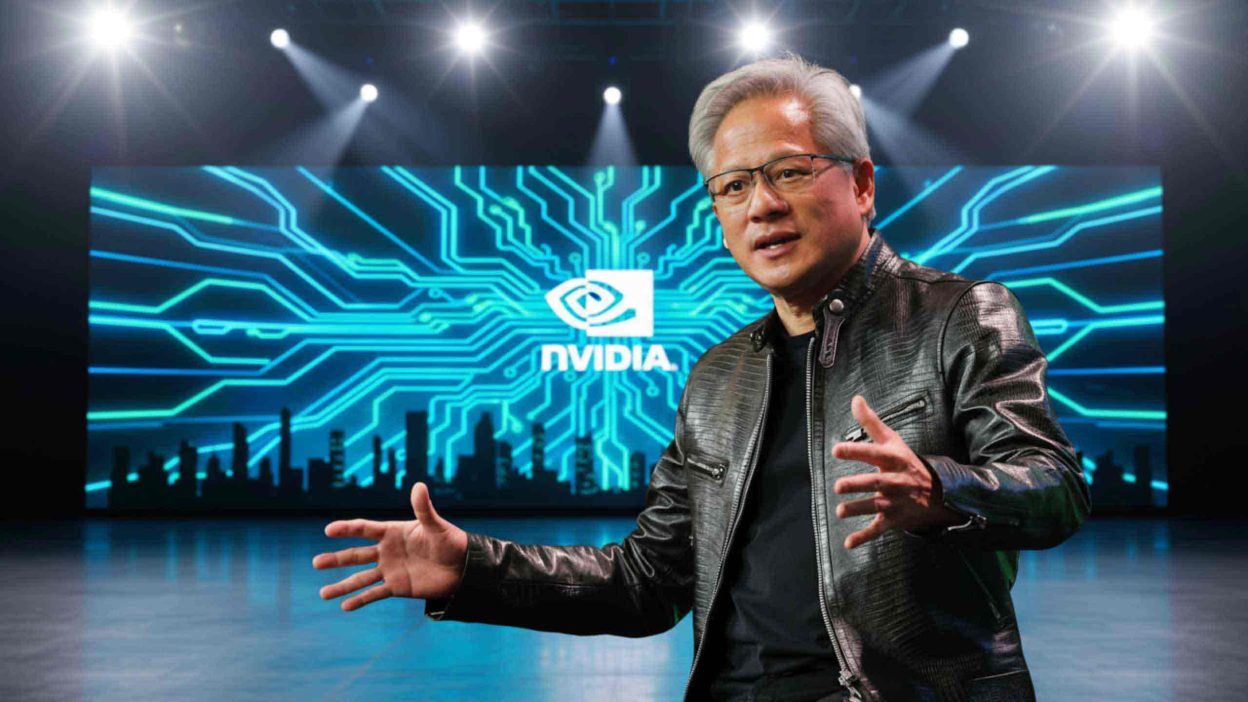
Nvidia Corp.’s CEO Jensen Huang declared a “ChatGPT moment for physical AI” at CES 2026, positioning the company’s latest autonomous driving technology as a potential rival to Tesla’s self-driving efforts and a major catalyst in the future of robotaxis and automated vehicles.
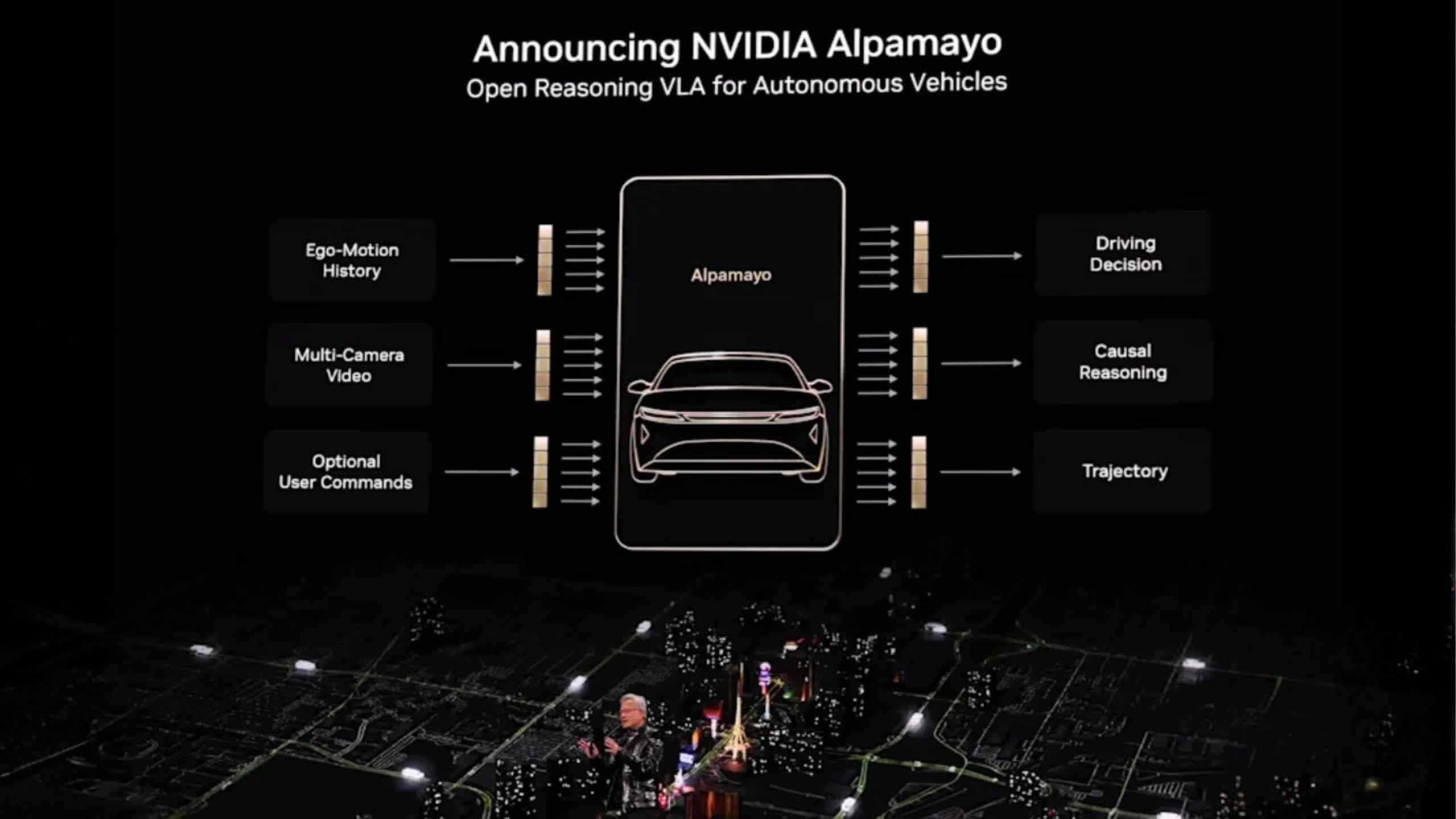
The announcement centers on Alpamayo, a reasoning-based autonomous driving model designed to combine perception, language understanding, and planning in real-world driving scenarios, a departure from traditional reactive systems.
For U.S. investors and the automotive industry, Nvidia’s push underscores a broader shift in how artificial intelligence is being integrated into vehicles, potentially reshaping competition with Tesla, Alphabet’s Waymo, and other autonomous platforms.
Nvidia’s “ChatGPT Moment” for Physical AI Explained
At the 2026 Consumer Electronics Show (CES) in Las Vegas, Huang described the progression from virtual AI, like language models, to AI capable of reasoning and acting in the physical world, dubbing it a “ChatGPT moment.”
Nvidia’s Alpamayo model is a vision-language-action (VLA) architecture that integrates sensory perception, reasoning, and action planning to make autonomous driving decisions more like human thinking. During the presentation, Nvidia showcased a test vehicle navigating autonomously through San Francisco streets.
This approach contrasts with systems such as Tesla’s Full Self-Driving (FSD), which rely on end-to-end neural networks trained on large fleets of real-world data but do not produce explicit reasoning outputs.
Nvidia Launches Vera Ratubin Next-gen AI platform at CES 2026
Alpamayo vs. Tesla and Waymo: The Technology Landscape
| Feature | Nvidia Alpamayo | Tesla FSD | Waymo System |
|---|---|---|---|
| Core model | Reasoning-based VLA | End-to-end neural net | Modular two-system (fast + slow) |
| Decision style | Perception + reasoning | Pattern recognition | Modular logic + learning |
| Autonomy goal | Level 4 fully autonomous | Seeks Level 4 | Operates in some areas at Level 4 |
| Transparency | Structured reasoning | Black-box outputs | Mixed logic/learning |
Models and capabilities based on CES 2026 demonstrations and industry comparisons.
Tesla’s FSD systems remain widely used and trained on massive real-world driving data, but they are generally considered Level 2 or advanced driver-assist today, requiring supervision. Nvidia aims to achieve Level 4 autonomy, where a vehicle can drive itself in various real-world conditions without requiring human intervention.
Alphabet’s Waymo has driven fully autonomous vehicles without safety drivers in limited geographies, making it a strong competitor alongside Nvidia’s and Tesla’s evolving strategies.
Where Nvidia’s Self-Driving Strategy Fits in the Broader AI Race
1. From Chips to Complete AI Stacks
Nvidia does not build vehicles itself but provides the AI hardware and software stack that automakers and robotaxi companies use, from simulation and training platforms to in-vehicle processors.
This aligns Nvidia’s business with a wide range of partners, from Mercedes-Benz integrating Alpamayo into its EVs to ride-hailing collaborations targeting robotaxi services by 2027.
2. Competition with Tesla and Others
Although Tesla and Nvidia share business ties, with Tesla using Nvidia GPUs in its training infrastructure, Huang’s remarks emphasize a competitive push in autonomous reasoning models compared with Tesla’s reactive neural network approach.
Tesla’s CEO Elon Musk has pushed back publicly, suggesting Nvidia’s system may not rival Tesla’s autonomy for years, noting the difficulty of solving rare “edge case” driving scenarios.
3. Robotaxi and Real-World Deployment Goals
Nvidia’s roadmap includes deploying Alpamayo-based autonomous driving technology in Mercedes-Benz CLA EV models in Q1 2026, with plans for robotaxi services with partners such as Uber and Lucid by 2027.
Success in these areas could help challenge Tesla’s and Waymo’s positions in the future urban autonomous mobility market.
Why It Matters to Americans
1. Silicon Valley vs. Global AI Platforms
The autonomous driving race is a central part of the broader U.S. AI and technology leadership narrative, with Nvidia, Tesla, and Waymo each representing different technical philosophies and commercialization strategies.
2. Implications for U.S. Auto and Tech Sectors
Advances in autonomous AI chips, perception systems, and decision models are likely to influence how U.S. automakers and tech firms invest in mobility innovation, safety, and regulatory strategies.
3. Investor and Consumer Signals
For investors, developments such as Nvidia’s Alpamayo demonstrations could signal potential shifts in competitive dynamics among top tech and automotive stocks, particularly NVDA, TSLA, and GOOG, in the self-driving space.
Nvidia’s unveiling of its Alpamayo autonomous driving model and characterization of a “ChatGPT moment for physical AI” highlight a strategic effort to challenge historical leaders like Tesla and Waymo in self-driving technology. By pushing reasoning-based autonomous systems and partnerships with major automakers, Nvidia aims to reshape the competitive landscape in autonomous driving and mobility services.
Frequently Asked Questions
What is meant by a “ChatGPT moment for physical AI”?
It refers to AI systems that can perceive, reason, and take action in real-world physical environments, similar to how ChatGPT advanced natural language understanding.
What is Nvidia’s Alpamayo?
Alpamayo is a vision-language-action model designed to combine perception, language-based reasoning, and action planning for autonomous driving applications.
How does this differ from Tesla’s system?
Tesla’s self-driving system mainly uses end-to-end neural networks trained on fleet data, whereas Alpamayo focuses on explicit reasoning and structured decision-making.
Who are Nvidia’s partners for deployment?
Mercedes-Benz plans to integrate Alpamayo into its EVs, and Nvidia aims to deploy robotaxi solutions with Uber and Lucid by 2027.
When might fully autonomous driving be achieved?
Nvidia targets Level 4 autonomy, but real-world deployment timelines are uncertain and depend on platform readiness and regulatory approval.
Nvidia’s CEO Jensen Huang called the latest autonomous driving developments a “ChatGPT moment for physical AI,” showcasing the Alpamayo reasoning model, a potential step toward Level 4 self-driving and global competition with Tesla and Waymo in autonomous vehicle technology.