
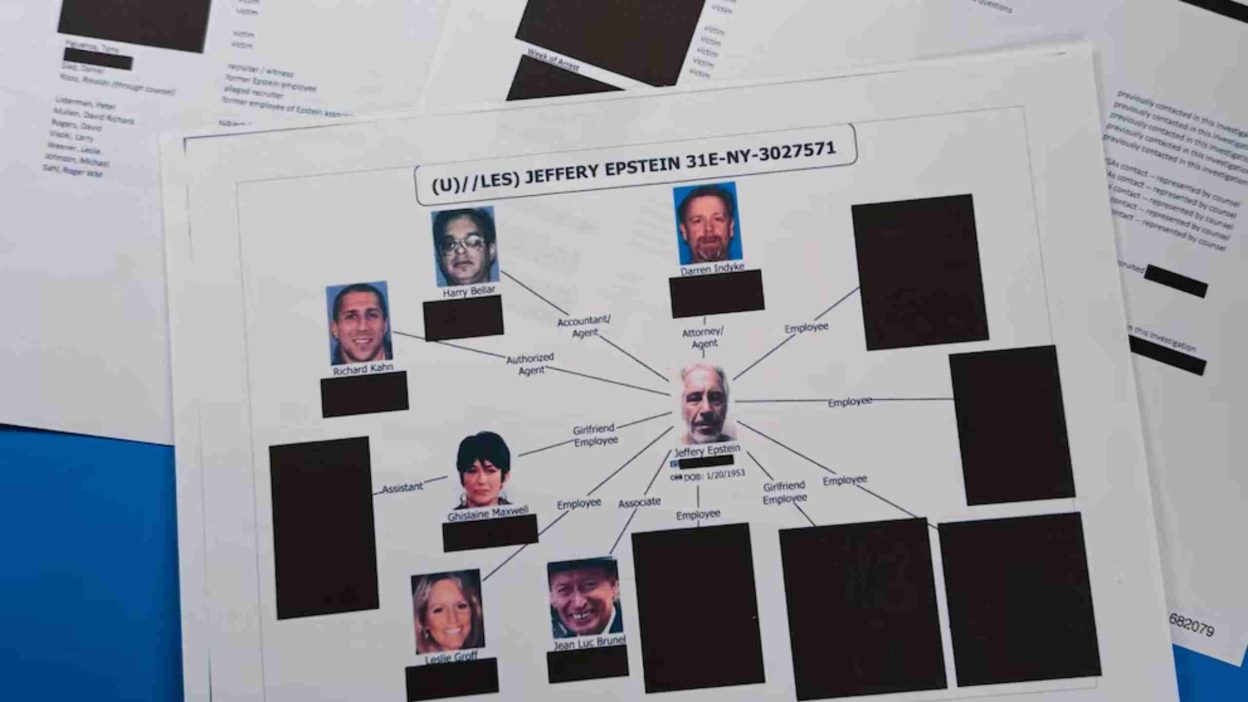
U.S. lawmakers have been reviewing and making public photos and other material related to convicted sex offender Jeffrey Epstein as part of the ongoing release of official government documents. These images were included in files provided by the Department of Justice and shown by members of Congress during oversight sessions. The release and review of these documents are part of efforts to comply with the Epstein Files Transparency Act, a federal law requiring broad disclosure of records in the government’s possession.
The images have drawn intense public and political attention because they come from investigative files tied to Epstein’s long-running criminal cases, and lawmakers are using them to better understand connections, redactions, and what remains undisclosed.
What the Images Show and How They Were Released
House Democrats Make Some Photos Public
Lawmakers on the House Oversight Committee publicly showed images from the estate of Jeffrey Epstein that were included in government records. The photos come from the large cache of files the committee received from the Justice Department and include previously unseen visuals from Epstein’s possessions and investigations.
Some of the released images depict Epstein alone and others show him with individuals whose identities have been obscured in the public versions of the files.
Part of a Larger Government Release
The Department of Justice has been releasing millions of pages of documents, videos and images under the Epstein Files Transparency Act. In late January the Justice Department said it had released over 3 million pages of material, which included more than 180,000 images and 2,000 videos related to Epstein and his associate Ghislaine Maxwell.
These disclosures reflect a legal requirement passed in late 2025 that compels broad release of records in federal possession related to Epstein’s activities.
Lawmakers Review Unredacted Files Behind Closed Doors
Unredacted Access for Members of Congress
In addition to the publicly released materials, members of Congress have been granted access to unredacted Epstein files in secure settings where they can review the documents without digital devices. Lawmakers expressed concern about the extent of redactions and information that remains hidden from the public.
Some lawmakers have criticized how the records were redacted, saying that names of influential figures were obscured even when not legally required to be hidden. These internal reviews have made the oversight process politically charged at times.
Why This Matters to the Public
Transparency in Government Records
The release of Epstein-related images and documents is tied to public demand for transparency in how the government handles criminal investigations involving powerful individuals. The Epstein Files Transparency Act was passed with strong bipartisan support to ensure disclosure of records held by federal agencies.
Public Trust and Oversight
Lawmakers said that making these files and images available helps the public understand what federal investigators uncovered and how files were handled. Critics argue that too many records remain redacted, making it hard to get a full picture.
Bottom Line
New images from the Epstein files have been displayed in official government documents reviewed by U.S. lawmakers as part of a broad effort to release material related to Jeffrey Epstein’s criminal history and associations. While many images and records have been made public under a new transparency law, continued review by lawmakers and debates over redactions highlight ongoing tensions about access to full information.
Frequently Asked Questions
What are the newly released Epstein estate photos?
They are images obtained from Jeffrey Epstein’s estate and released by the House Oversight Committee as part of its ongoing review of Epstein-related records.
Who released the photos?
House Democrats on the House Oversight Committee made the photos public. The release was framed as a transparency effort.
What do the photos show?
The photos show areas of Epstein’s property and personal items. As of now, no illegal activity is shown in the images themselves, and their broader significance is still being reviewed.
Why were the photos released now?
Lawmakers say the release is part of continued congressional efforts to examine Epstein’s network and how authorities handled past investigations.
Do the photos name or implicate new individuals?
At this time, no new individuals have been formally accused or implicated based solely on the photos.
Are there ongoing investigations related to these materials?
Some Epstein-related matters remain under review by lawmakers, but no new criminal charges have been announced based on this photo release alone.
House Democrats released new photos from Jeffrey Epstein’s estate as part of a transparency review. The images add context to ongoing congressional oversight but do not show illegal activity.
New photos from Jeffrey Epstein’s files have been shown in official government documents reviewed by U.S. lawmakers under a federal transparency law. The images are part of a large release of Epstein-related records but remain subject to debate over redactions and completeness.