
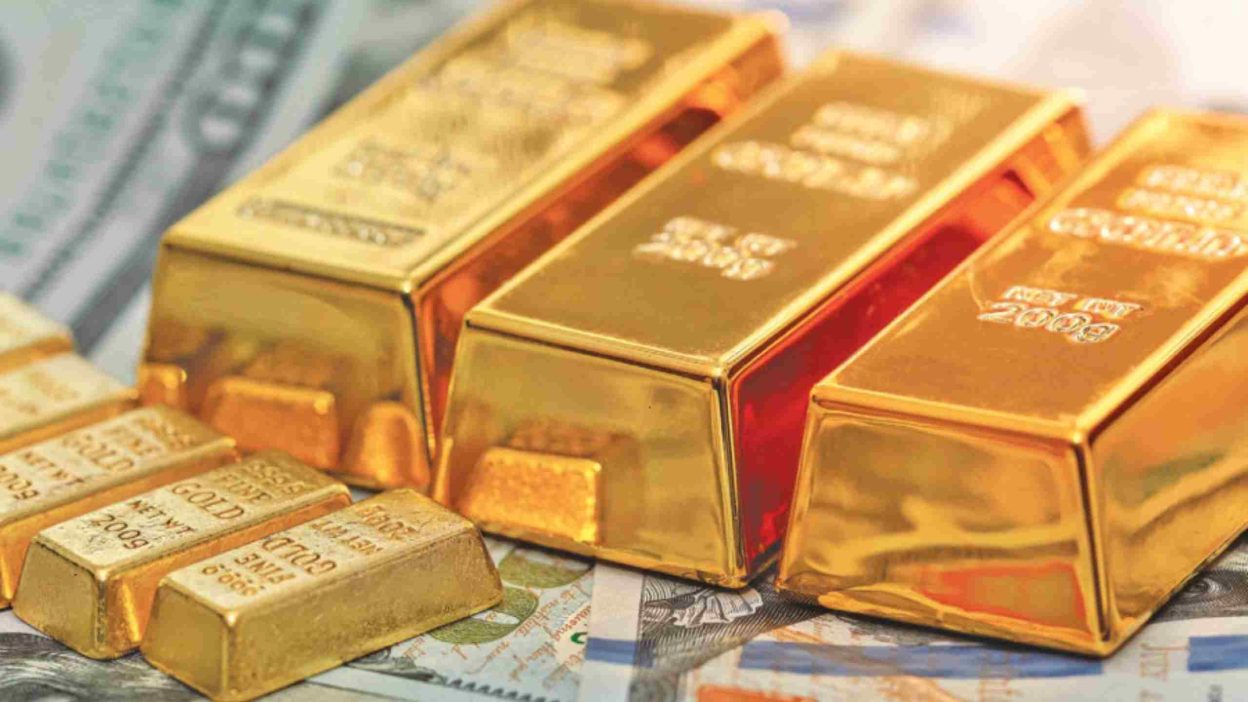
Gold prices surged past the $5,500 per ounce mark, a historic first, as the metal extended its powerful rally amid a weak U.S. dollar and heightened global uncertainty. This move reflects broad investor demand for safe-haven assets like gold and silver.
The rally comes after days of gains, with bullion jumping sharply and silver also setting record levels. For everyday Americans watching financial markets, these moves highlight how currency trends, economic policy, and geopolitical stress can drive demand for precious metals.
Why Is This Happening
Several key forces are driving the gold price higher:
Weak U.S. dollar making gold more attractive in global terms.
Safe-haven demand from investors seeking protection amid geopolitical risks.
Debasement trade where investors buy physical assets in response to concerns about fiat currency value.
The combination of currency weakness and heightened uncertainty has pushed buyers into precious metals, lifting prices to record levels.
Current Market Snapshot
| Market Indicator | Status |
|---|---|
| Gold price | Above $5,500 per ounce (record) |
| Dollar trend | Weakening against other currencies |
| Silver price | Also at record levels above $120 per ounce |
| Rally duration | Ninth consecutive day of gains |
Gold’s rise has been sustained over more than a week of trading and reflects ongoing demand for assets viewed as stores of value.
Why It Matters to Americans
Gold’s surge matters because:
Consumer and macro effects: Rising gold often signals concern over inflation, currency value, and broader economic stability.
Investment behavior: U.S. investors may shift money into safe assets when markets feel risky.
Currency dynamics: A weaker dollar affects import prices, export competitiveness, and overall purchasing power.
This rally reflects more than commodity price moves; it shows how financial markets respond to monetary policy expectations and global risks.
Key Comparisons
| Asset | Recent Trend |
|---|---|
| Gold | New record highs above $5,500 |
| Silver | Also at record levels above $120 |
| U.S. dollar | Weaker against major currencies |
| Treasury bonds | Seen as less attractive than precious metals |
Safe-haven assets like gold and silver have outperformed in the face of currency weakness and economic uncertainty.
Near-Term Outlook
Analysts note that gold prices could continue moving higher if currency weakness persists and global tensions remain elevated. Some forecasts point to further record levels later in the year. However, price swings can be volatile, and shifts in monetary policy or macro conditions could influence the pace of gains.
Practical Takeaways
Gold has topped $5,500 per ounce for the first time in history.
Weak dollar conditions and safe-haven demand are key drivers.
Silver is also trading near record levels above $120 per ounce.
These moves reflect broader market reactions to economic and geopolitical stress.
Bottom Line
The historic rise in gold prices above $5,500 per ounce highlights how markets can react to currency trends, risk perceptions, and global uncertainty. For American investors and observers, the rally underscores the role of precious metals as a store of value in times of financial stress.
Frequently Asked Questions
What is driving gold above $5,500?
A weaker U.S. dollar and strong investor demand for safe-haven assets have
helped push gold prices above $5,500 per ounce.
Is silver also rising?
Yes. Silver prices have also surged, reaching record highs above
$120 per ounce amid strong investment and industrial demand.
Why do investors buy gold?
Investors often turn to gold as a safe haven during periods of currency
weakness, inflation concerns, or heightened geopolitical risk.
Does this reflect Federal Reserve policy?
Gold’s rally has been supported by a softer U.S. dollar and expectations
for easier monetary policy, which tends to boost demand for non-yielding assets.
Gold prices have surpassed $5,500 per ounce, a record level, driven by a weaker dollar, safe-haven demand, and ongoing global uncertainty. Silver has also reached all-time highs above $120 per ounce.