
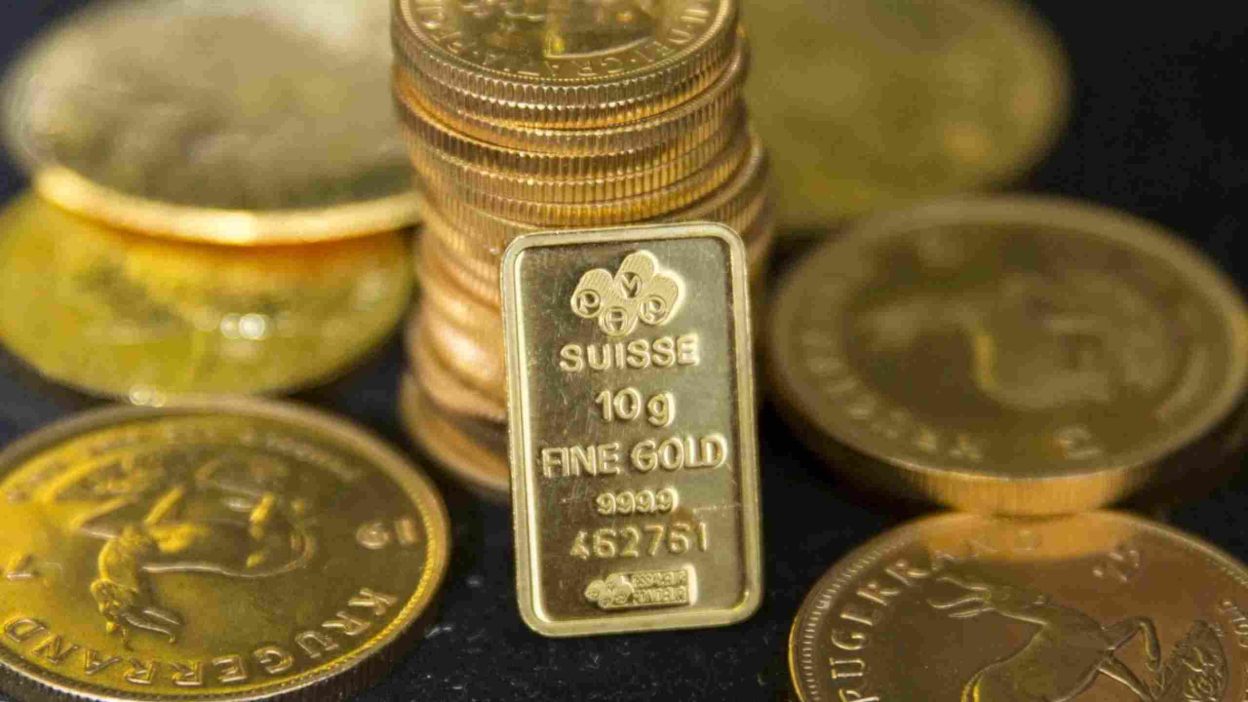
Gold prices stayed near the $2,000-per-ounce level recently as investors digested fresh U.S. economic data and ongoing global risks. Traders continue to view gold as a hedge against inflation and uncertainty, especially when central bank policy and geopolitical concerns influence financial markets.
Movements in gold prices may not affect daily life directly, but they reflect broader investor sentiment about inflation, the strength of the U.S. dollar and economic stability.
Current Market Snapshot
Gold Prices Stable Near $2,000
Gold futures in New York traded quietly with prices holding near key psychological levels around $2,000 per ounce. Markets did not see large swings in recent sessions, suggesting a balance of bullish and cautious sentiment among traders.
Analysts noted that while gold has edged lower from recent highs, its ability to stay near $2,000 indicates ongoing support from safe-haven demand.
Trading Ranges and Volume
Trading activity showed moderate volume, with investors waiting for new data points such as inflation figures, economic reports and central bank commentary that could influence future price direction. While the precious metal has not broken sharply higher or lower, it remains within a historically strong range.
What’s Driving Gold Prices
Economic Data and Central Bank Policy
Investors monitor U.S. inflation readings and labor market data for clues about Federal Reserve interest rate policy. Higher interest rates can make non-yielding assets like gold less attractive, while expectations for slower rate hikes or rate cuts can support gold prices.
Recent data pointed to softer consumer spending and mixed inflation signals, leaving markets uncertain about the pace of future rate changes.
Safe-Haven Demand on Global Risks
Gold is often seen as a hedge against geopolitical tensions and market volatility. Ongoing events such as conflicts abroad, political instability or financial stress in certain regions can increase demand for gold as a “safe harbor” asset.
Although risk appetite among investors varies, geopolitical uncertainty continues to influence sentiment toward gold.
Dollar Strength and Bond Yields
Gold prices also move in relation to the U.S. dollar and government bond yields. A weaker dollar tends to support gold prices because it makes gold cheaper for buyers holding other currencies. Conversely, stronger bond yields can push investors toward interest-bearing assets instead of gold.
Recent currency and yield movements have shown mixed signals, contributing to gold’s relatively flat trading near $2,000.
Why This Matters
Inflation Hedge and Portfolio Diversification
Many investors include gold in portfolios as a hedge against inflation and currency depreciation. When inflation expectations rise or economic growth slows, gold can act as an insurance asset, helping protect overall portfolio value.
U.S. retirees with diversified portfolios may hold gold indirectly through exchange-traded funds or mutual funds to reduce exposure to downside risks.
Economic Indicator of Investor Mood
Gold’s performance often reflects broader uncertainty about economic conditions. When markets become nervous about growth or stability, gold tends to hold appeal relative to riskier equities or commodities.
Bottom Line
Gold prices remain steady near $2,000 per ounce as markets balance economic data, expectations for interest rate policy and ongoing global risks. While trading has been calm, the precious metal continues to serve as a barometer of investor sentiment around inflation and uncertainty. For many investors, gold’s role as a safe-haven and inflation hedge keeps it in play even when markets shift gradually.
Frequently Asked Questions
Why is gold priced near $2,000 important?
The $2,000 level is widely viewed as a psychological benchmark where support and resistance often form, reflecting investor confidence and market perception of gold’s value at that price.
What drives gold prices?
Gold prices are influenced by inflation expectations, interest rates, geopolitical risk, U.S. dollar strength, and overall investor sentiment toward risk assets.
Does gold pay interest?
No. Gold does not pay interest or dividends. Its value is derived from market demand, scarcity, and its role as a perceived safe-haven asset.
Will gold prices go higher?
Gold prices depend on economic data, inflation trends, currency movements, and global risk conditions. This content is informational only and does not provide price predictions.
How can individual investors access gold?
Investors can access gold through physical bullion, gold ETFs, or funds holding gold-related assets. Each option involves different costs, risks, and storage considerations.
Gold prices held near $2,000 per ounce as investors balanced economic data and safe-haven demand driven by global risks and interest rate expectations.