
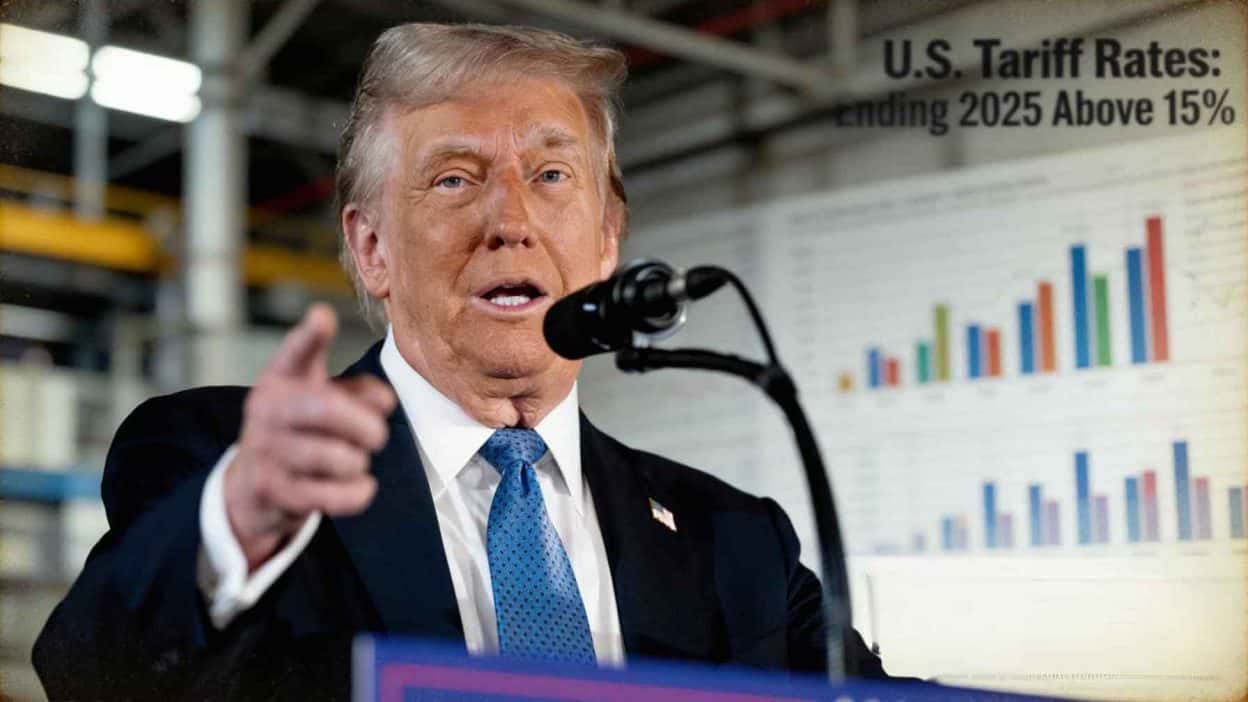
As 2025 draws to a close, the average U.S. tariff rate on imports is expected to finish the year at levels well above 15%, a sharp rise from historical norms and the highest in decades. This elevated tariff environment reflects a significant shift in U.S. trade policy.
For everyday Americans, high tariffs may feel distant at first glance. Yet, they can influence the cost of imported goods, affect business costs, and shape broader economic trends that touch household budgets.
Experts generally do not expect broad reductions in these tariffs in 2026, meaning the effects of elevated trade barriers could extend into the coming year.
Why This Is Happening
In 2025, the U.S. government enacted sweeping tariff increases on a wide range of imported goods across many countries. These higher import taxes were part of a broader policy aimed at boosting domestic manufacturing and responding to perceived unfair trade practices.
As a result, the average effective tariff rate on imports has climbed dramatically from historic lows toward double-digit levels not seen since the mid-20th century. Tariffs varied widely by country and product category, but the overall trend clearly shifted toward higher import charges.
Current Tariff Snapshot
Below is a simplified snapshot of the tariff environment for U.S. imports as of late 2025:
| Measure | Approximate Level |
|---|---|
| Average U.S. tariff rate | Above 15% |
| Tariff range by category | Ranging from ~10% to over 40% on specific goods |
| Comparison to pre-2025 | Significantly higher than the typical 2-3% average before 2025 |
This table illustrates the significant shift in tariff policy over the past year and highlights the substantial changes it has brought, compared to historical norms.
Why It Matters to Americans
High tariffs can influence the U.S. economy and everyday life in several ways:
Increased consumer prices: Tariffs raise the cost of imported products and components, which can translate into higher prices for everyday goods such as electronics, clothing, and household items.
Business costs and supply chains: U.S. companies that rely on imported materials may face higher input costs, which can affect profit margins and operational decisions.
Economic sentiment: Persistent tariffs are among the factors cited by financial executives as contributing to expectations of rising prices next year.
These effects, while not uniform, can filter through the economy over time, affecting purchasing power and business strategies.
Key Comparisons
Tariff Policy Then vs. Now
| Feature | Pre-2025 U.S. Tariffs | 2025–2026 U.S. Tariffs |
|---|---|---|
| Average tariff rate | Low single digits | Above 15% |
| Scope of tariffs | Targeted tariffs | Broad-based across many countries and sectors |
| Consumer impact | Relatively limited | Broader potential price pressures |
This comparison shows how much trade policy has changed in a short time and why the new tariff regime stands out.
Near-Term Outlook
Many analysts believe that tariffs will remain elevated through 2026. While some adjustments or exemptions could occur, the overall policy environment suggests that tariff rates will not decline substantially in the near term.
Some sector-specific negotiations and trade deals may ease tariffs for certain products or partners, but the broad trend toward higher tariffs looks likely to persist as policymakers balance trade objectives and domestic economic goals.
Practical Takeaways
Tariffs affect prices: Higher import charges make imported goods more expensive and can ripple through supply chains to affect consumer costs.
Business planning matters: Firms are adjusting sourcing and pricing strategies in response to higher tariffs.
Policy changes are possible: Trade policy remains a political issue; changes could happen, but broad reductions are not widely expected yet.
Conclusion
U.S. tariff rates are set to finish 2025 significantly higher than they were in recent years, and current policy signals suggest these levels could remain largely unchanged through 2026. While these import taxes aim to support domestic industries and strengthen trade positions, they also have economic effects that may show up in consumer prices and business planning. Keeping an eye on tariff developments can help Americans understand how global trade policy may shape economic conditions in the year ahead.
Frequently Asked Questions
1. What are tariffs?
Tariffs are taxes placed on imported goods, making foreign products more expensive and often encouraging domestic production.
2. Are U.S. tariff rates unusually high right now?
Yes. Tariff levels above 15% are significantly higher than historical averages, which were typically much lower before 2025.
3. Could tariffs make everyday goods more expensive?
Tariffs can raise the cost of goods that rely on imported materials or finished goods, potentially influencing consumer prices over time.
4. Are experts expecting tariffs to drop soon?
Few analysts are forecasting major tariff reductions through 2026, though targeted adjustments remain possible.
5. Do tariffs affect the broader economy?
Tariffs can influence supply chains, business costs, consumer prices, and overall economic planning, though the magnitude of impact varies by sector.
U.S. tariffs are ending in 2025 at historically high levels and are likely to stay elevated through 2026, affecting prices, business strategies, and economic conditions for American consumers.