
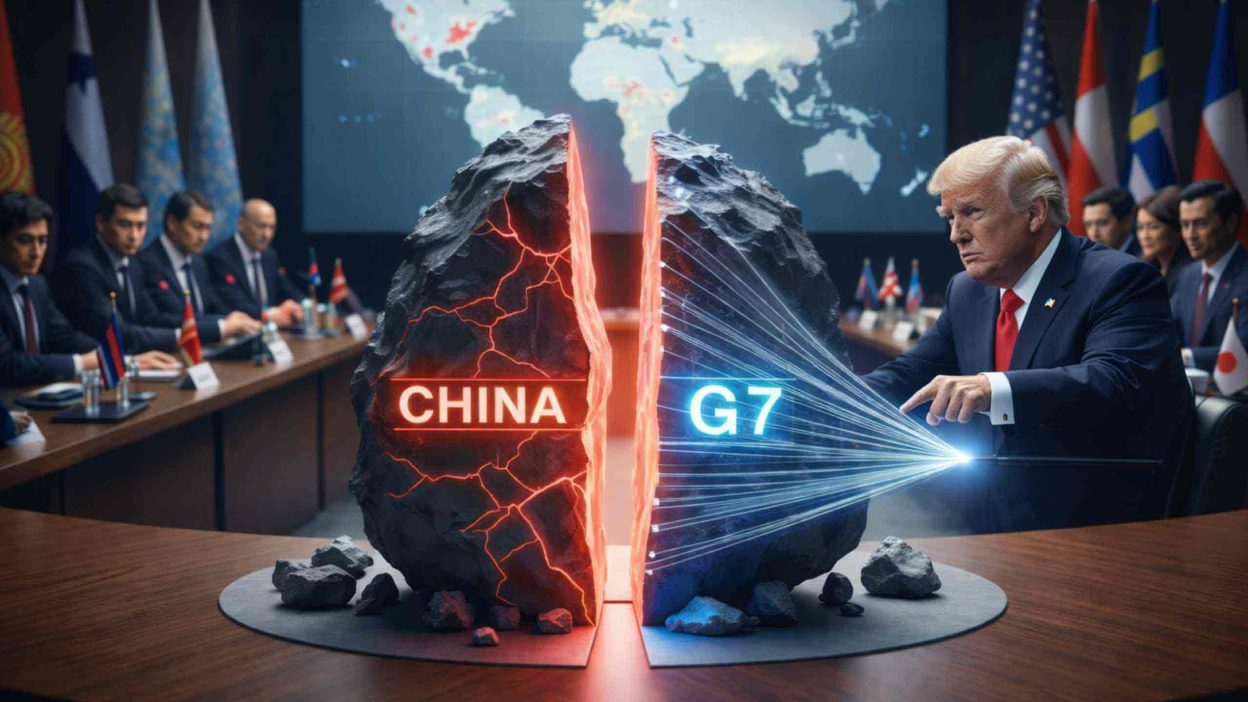
The United States is hosting a high-level meeting this week in Washington on rare earths and critical minerals as part of efforts with the Group of Seven (G7) and allied partners to address global supply chain vulnerabilities tied to China’s dominant position in these essential materials.
Treasury Secretary Scott Bessent will convene finance ministers and top officials from G7 economies, the European Union, Australia, India, South Korea, and Mexico to discuss ways to secure and diversify supply chains for rare earths and other key raw materials used in advanced technologies and defense systems.
The meeting underscores growing urgency among U.S. and allied policymakers to reduce reliance on Chinese supply amid export curbs and geopolitical tensions that have strained global markets.
What This Rare Earths Meeting Is About
The talks, scheduled for Sunday and Monday, are focused on coordinating global responses to China’s supply chain dominance in rare earths, which are vital for everything from semiconductors and electric vehicles to defense and renewable energy technologies.
Officials are expected to explore ideas to:
Strengthen alternative supply chains outside China
Coordinate strategic stockpiles and reserves
Support investment in mining, processing, and refining outside China
Discuss price stability mechanisms and industrial policy frameworks for rare earths and other critical minerals
Secretary Bessent has emphasized urgency and collaboration, saying the effort is a “very big undertaking” and that allied nations need to move faster to diversify supplies and reduce strategic dependencies.
Why Rare Earths Matter Globally
China remains the dominant supplier of rare earth elements, controlling a large majority of refining capacity for critical minerals such as neodymium, praseodymium, lithium, cobalt, and graphite, materials crucial for modern technology and defense equipment.
This dependency poses risks for countries that rely heavily on imports for:
Advanced electronics and AI chips
Electric vehicle batteries and motors
Renewable energy systems
Military and aerospace applications
As a result, policymakers in the U.S. and allied nations are pursuing diversified sources, including domestic production, allied partnerships, and strategic reserves to reduce supply risk.
Global Supply Chain Context
| Issue | Key Details |
|---|---|
| China’s dominance | Controls a large portion of refining capacity for rare earths and other critical minerals. |
| G7 meeting purpose | Coordinate supply diversification and resilience. |
| Allied participants | G7, EU, Australia, India, South Korea, Mexico. |
| Focus materials | Rare earth elements, battery metals, and other strategic minerals. |
| Strategic themes | Urgency, collaboration, supply chain security. |
Australia, which possesses significant rare earth and other critical mineral reserves, has also announced plans to prioritize antimony, gallium, and rare earths in its strategic reserve efforts as part of broader allied cooperation on the issue.
Why It Matters to Americans
1. National Security and Industrial Leadership
Rare earths and critical minerals are foundational to U.S. defense technologies, aerospace systems, and semiconductor manufacturing. Any supply chain disruptions, especially tied to Chinese export policies, could affect national security and technological competitiveness.
2. Technology and Clean Energy Transition
Materials such as lithium, cobalt, and rare earth magnets are key components in electric vehicles, batteries, wind turbine,s and AI hardware. Securing stable and diversified supplies helps underpin the clean energy transition and tech innovation.
3. Economic Resilience
Diversifying sources of critical minerals can reduce exposure to geopolitical supply shocks and price volatility that might ripple into broader industrial and consumer markets.
Practical Takeaways
The U.S. is hosting a G7 critical minerals meeting to address rare earth supply chain risks and reduce dependence on China.
Officials are urging faster action and collaborative strategies among allied nations.
China’s dominant role in refining rare earths continues to be a primary focus for supply diversification.
Strategic stockpiles and alternative production are part of broader efforts to strengthen global resilience.
The rare earths meeting in Washington reflects growing international effort, led by the U.S. and G7 partners, to reduce reliance on China’s dominant position in critical minerals. With implications for defense, technology, and clean energy supply chains, the talks underscore high priorities among allied countries to secure diversified and resilient access to essential resource inputs.
Frequently Asked Questions
Why is the U.S. hosting this rare earths meeting?
To coordinate with G7 and partner nations on diversifying global supply chains and reducing reliance on China for critical minerals.
Who is participating in the talks?
Representatives from G7 countries, the EU, Australia, India, South Korea, and Mexico are expected to attend.
What are rare earths used for?
They are essential for electronics, electric vehicles, renewable energy systems, and defense technologies.
Why does China dominate this market?
China controls a large share of global refining and processing capacity, giving it significant strategic leverage.
Will this meeting produce immediate action?
Officials stress urgency, but concrete joint actions are expected to develop over time as part of broader cooperation.
The United States is hosting a G7-linked meeting in Washington to coordinate global strategies for securing rare earth and critical mineral supply chains, with allied partners seeking to reduce dependence on China’s dominant refining power and strengthen resilience in technology and defense sectors