
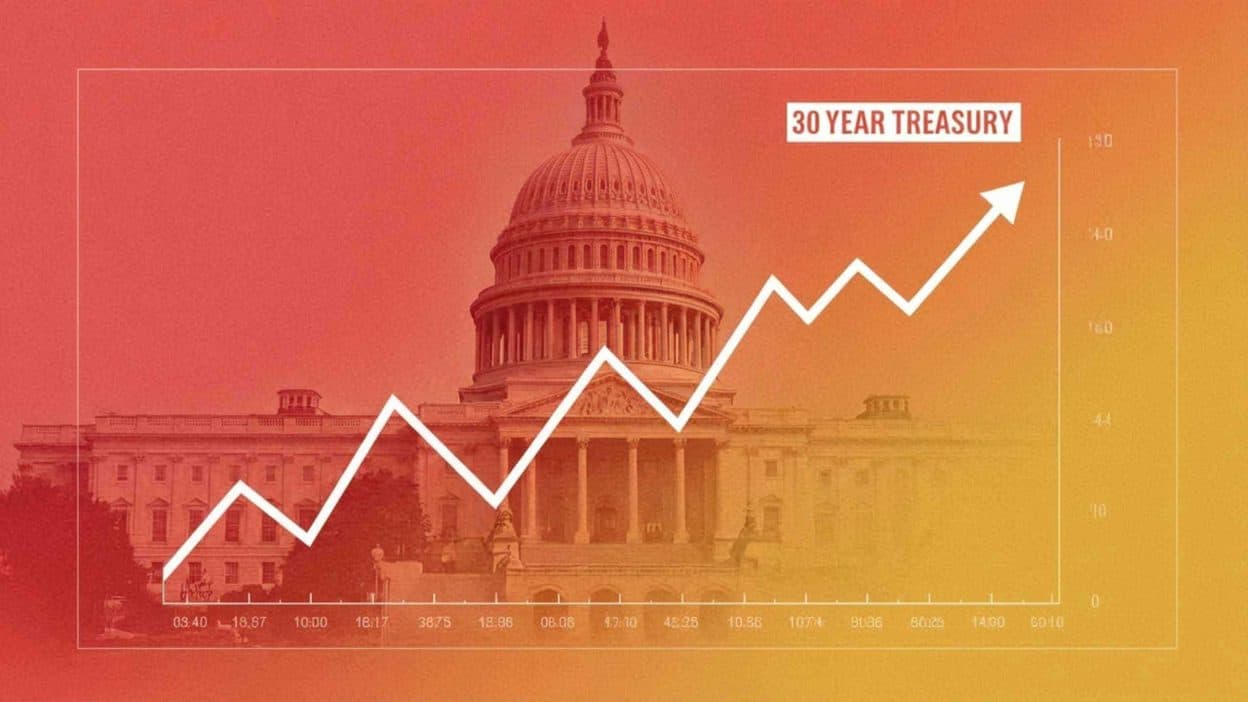
Long-term U.S. government bond yields, especially on the 30-year Treasury, have risen and are now near multi-month highs, drawing attention from financial markets as investors adjust to changing economic expectations. This move comes as the bond market adapts to shifts in Federal Reserve policy outlooks and broader inflation and growth trends.
For everyday Americans, changes in Treasury yields can ripple through borrowing costs, savings returns, and investment decisions. Understanding why long-term yields are rising helps put housing markets, loan rates, and retirement planning into clearer perspective.
What’s Happening With 30-Year Yields
The yield on the 30-year U.S. Treasury bond, the interest rate investors earn on this long-term government debt, has climbed recently and sits near the highest levels seen in several months. This increase reflects broader market shifts rather than short-lived moves.
Long-term yields rise when:
Bond prices fall: Investors sell longer-dated Treasuries.
Inflation expectations persist: Higher expected future inflation usually pushes yields up.
Demand for long-term borrowing changes: If investors demand more return to lock in their money, yields must rise.
Current Yield Snapshot
| Measure | Recent Status |
|---|---|
| 30-year Treasury yield | Near multimonth highs (~4.8%) |
| Trend | Rising from earlier periods |
The move shows that long-term borrowing costs are higher than they were earlier in 2025, even as short-term yields respond to Federal Reserve policy expectations.
Why It Matters to Everyday Americans
1. Higher mortgage and loan costs:
Long-term Treasury yields influence rates on 30-year fixed mortgages and other long-dated loans. When these yields rise, borrowing costs, including mortgage and business loans, can increase over time, squeezing budgets for homebuyers or refinancers.
2. Retirement savings impact:
Higher yields can benefit savers who hold bonds or bond funds, offering better income opportunities than they may have seen in recent years.
3. Market sentiment and investment behavior:
Rising long-term yields may shift investor preferences between stocks and bonds, affecting portfolio performance and risk planning for everyday investors.
What’s Driving the Move
Several forces help explain the climb in 30-year yields:
Inflation concerns: Persistent inflation pressures can push investors to demand higher yields for long-dated bonds.
Federal Reserve outlooks: Expectations about future interest-rate policy, including possible rate cuts or pauses, can alter demand for long versus short maturities.
Government debt supply: Larger government borrowing needs may require higher yields to attract buyers for long-term bonds.
These trends reflect how bond markets balance economic data, central-bank communication, and fiscal pressures.
Comparing Long-Term vs. Short-Term Yields
| Yield Type | Typical Influence |
|---|---|
| Short-term (2-10 years) | Fed policy expectations |
| Long-term (30 years) | Inflation expectations, growth outlook, and debt supply |
Longer yields tend to respond more to broad economic assumptions than to immediate policy moves, showing why the 30-year yield’s rise can signal deeper shifts in market expectations.
Practical Takeaways
Mortgage planning: Prospective homebuyers and refinancers should monitor long-term yields as they help shape fixed mortgage rate trends over time.
Portfolio adjustments: Investors may review bond exposure and duration risk when yields rise, as longer-dated bonds tend to lose value when yields go up.
Savings opportunities: Higher yields on Treasuries can benefit conservative savers or pension funds seeking stable returns.
The recent rise in 30-year Treasury yields to multi-month highs reflects shifts in market expectations about inflation, growth, and monetary policy. For everyday Americans, this trend can influence borrowing costs, savings returns, and investment strategy decisions. Tracking long-term yield movements offers valuable context for personal finance planning in 2026 and beyond.
Frequently Asked Questions
What does a rising 30-year Treasury yield mean?
A rising yield suggests investors are demanding higher returns for holding long-term government debt, often reflecting inflation expectations and views on the economic outlook.
How do Treasury yields affect mortgage rates?
Mortgage rates are often influenced by long-term Treasury yields, so rising yields can gradually lead to higher borrowing costs for homebuyers.
Are higher yields good for savers?
Yes. Higher yields can provide improved income from bonds and other long-term, interest-bearing investments.
Do rising yields hurt the stock market?
Higher yields can make bonds more attractive compared with stocks, which may reduce stock demand, though many factors influence equity markets.
Should everyday investors worry about yield movements?
Not necessarily. However, understanding yield trends can help with decisions related to borrowing, investing, and retirement planning.
The U.S. 30-year Treasury yield has climbed to multi-month highs as bond markets react to inflation expectations and monetary policy outlooks. This rise affects borrowing costs, savings returns, and investment decisions for everyday Americans.