
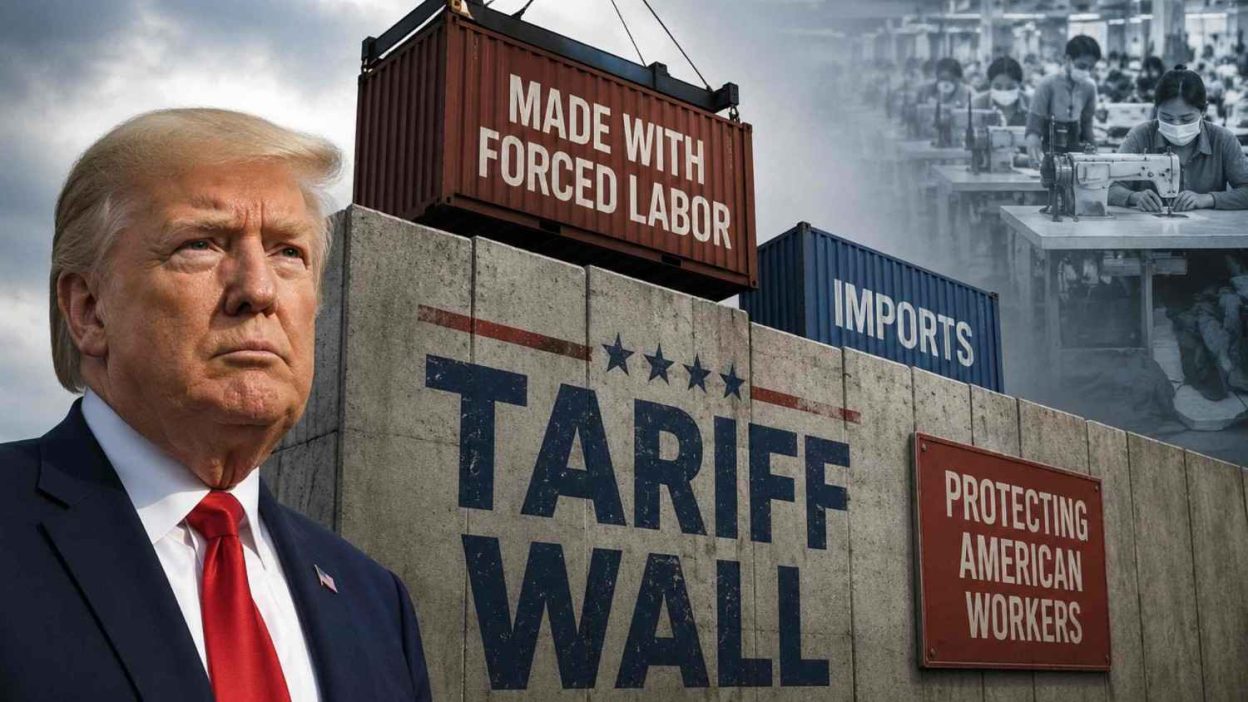
Global trade is bracing for another massive shakeup. In one of the most significant economic moves of his current administration, President Donald Trump has proposed a sweeping new round of tariffs targeting imports from 60 different trading partners.
Unlike previous sweeping trade penalties, this latest move is rooted in a massive federal investigation into how America’s international partners handle goods tied to forced labor. With rates starting at 10% and scaling higher for certain nations, this policy represents a calculated attempt by the administration to rebuild its signature protectionist wall through a new, legally resilient framework.
Here is a breakdown of what these new proposed tariffs look like, who they hit the hardest, and how they could affect global supply chains and everyday consumers.
The Two-Tiered Tariff System: Who Is Affected?
The Office of the US Trade Representative (USTR) announced the proposal late Tuesday, establishing a two-tiered system based on how strictly other countries police forced labor within their supply chains.
The baseline penalty starts at 10%, but countries deemed to have weaker enforcement face an even steeper climb.
1. The 10% Rate (Allies & Major Trade Partners)
A 10% tariff will apply to close US allies and primary economic partners that either actively prohibit forced labor imports or have formally pledged to do so. This list includes:
Canada and Mexico
The European Union (EU)
The United Kingdom (UK)
Taiwan
2. The 12.5% Rate (Higher-Risk Economies)
A higher 12.5% tariff will be levied on major economies that the USTR claims have “failed to impose and effectively enforce” adequate prohibitions on forced labor. This bracket includes:
China
India
Japan
South Korea
Brazil
Switzerland
According to US Trade Representative Jamieson Greer, the policy is designed to address a glaring economic disparity. The USTR’s investigation concluded that none of the 60 scrutinized economies effectively enforce forced labor import bans, creating a dynamic where American workers are forced to compete on an uneven playing field.
Targeted Goods and Major Exemptions
The administration isn’t placing a blanket tax on every single item entering the country. Instead, the USTR has flagged 34 specific goods across various nations that are highly vulnerable to forced labor practices.
Some of the primary targeted sectors include:
Garments & Textiles: Specifically focusing on supply chains tied to raw cotton.
Green Energy Components: Critical minerals used in the manufacturing of solar products.
Agriculture & Commodities: Items like palm fruit used for palm oil, and fish used for commercial fish oil and meal.
What is Exempt?
To keep consumer panic and immediate food inflation at bay, the administration built notable exclusions into the policy. Everyday supermarket essentials like beef, tomatoes, bananas, coffee, orange juice, and other food products are entirely exempt.
Additionally, fuels, specific industrial chemicals, and metals (which are already managed under separate, existing trade penalties) will not be subject to these new levies.
Why the Sudden Legal Shift?
If this strategy feels familiar, that’s because it is, but the legal mechanics this time around are entirely different.
Back in February, the administration’s broad trade agenda suffered a heavy blow when the Supreme Court struck down previous tariffs that had been pushed through via emergency presidential powers. A temporary 10% global levy enacted under Section 122 is also set to expire this July and faces its own steep legal battles.
To avoid another courtroom defeat, the administration is pivoting to Section 301 of the Trade Act of 1974 and citing the Trafficking Victims Protection Reauthorization Act of 2005. Trade analysts note that Section 301 investigations are widely considered far more legally sound and flexible, making it much harder for courts or foreign bodies to dismantle them.
International Backlash and Economic Ripple Effects
Unsurprisingly, the global community is reacting with a mix of frustration and caution.
The European Union quickly labeled the move “unjustified,” though officials noted they intend to respect the broader terms of their existing trade accords with the US. Australia’s trade ministry echoed that sentiment, calling any potential tariffs on its exports “inconsistent with our free trade agreement.” Meanwhile, Beijing criticized the penalties, though domestic experts suggest there is still “room for communication” because the policy targets a vast global network rather than solely targeting China.
The business community is also raising red flags regarding supply chain stability. John Denton, Secretary-General of the International Chamber of Commerce, warned that applying a single investigatory framework across 60 distinct economies, including long-standing US allies, will trigger “significant compliance uncertainty” for international businesses.
Market Reaction and Inflation Fears
Following the announcement, European markets felt an immediate sting, particularly hurting major automotive giants like Volkswagen AG and Mercedes-Benz Group AG.
More broadly, these tariffs land at a precarious moment for the global economy. With energy prices fluctuating and broader geopolitical conflicts keeping financial markets on edge, introducing new import penalties has reignited fears of consumer inflation—a sensitive political topic ahead of the upcoming November midterm elections.
What Happens Next?
These tariffs will not go into effect overnight. The USTR has mapped out a strict public review process, allowing businesses and trade partners to voice their concerns and potentially negotiate changes before the duties are permanently codified.
July 6: Deadline for written public comments.
July 7: The Section 301 panel will officially convene public hearings.
As the July expiration date for current stopgap tariffs approaches, this new policy will likely be polished and ready to seamlessly take their place. For businesses relying on international supply chains, the clock is ticking to adapt to Washington’s newly fortified trade wall.