

In a continuous effort to stabilize the country’s financial system, Nepal Rastra Bank (NRB) has announced it will collect Rs 30 billion from Banks and Financial Institutions (BFIs) today, May 20, 2026. The central bank is utilizing its “Deposit Collection” instrument to pull excess cash out of the banking channel, a standard procedure when the market is over-liquified.
This move marks another sequential intervention by the regulator to keep short-term interest rates stable and prevent monetary imbalances.
Why is the Central Bank Collecting Cash?
Nepal’s commercial banks are currently experiencing high liquidity, meaning they have a surplus of deposit funds available but credit growth (loan issuance to businesses and consumers) remains relatively slow.
When too much cash sits idle in the banking system, it can lead to several challenges:
Declining Interest Rates: Interbank and short-term deposit rates can drop too low.
Inflation Risks: Excess money supply can inadvertently pressure consumer inflation if not managed.
Productive Deployment: The central bank steps in to absorb this cash temporarily until credit demand naturally picks up in the private sector.
How the Deposit Collection Instrument Works
The Rs 30 billion collection is executed through an auction process open to commercial banks, development banks, and finance companies.
The Bidding Process: BFIs bid on the interest rate they are willing to accept from NRB to store their excess funds with the central bank.
Maturity Period: The funds are held by the central bank for a set timeframe (often 7 or 14 days), after which the principal plus interest is returned to the participating banks.
Interest Rate Determination: The final rate is decided through a Dutch auction system, where the lowest bids are prioritized.
What This Means for the Economy and Savers
For Savers: This liquidity absorption helps put a “floor” under falling interest rates. It prevents fixed deposit and savings account rates from dropping too drastically by creating artificial demand for cash.
For Borrowers: Loan rates are unlikely to change immediately because the total volume of loanable funds left in the market remains highly adequate.
For the Interbank Market: The rate at which banks lend to one another will likely stay closer to the central bank’s targeted corridor, keeping daily financial operations predictable.
Nepal Rastra Bank to Absorb Rs 30 Billion from Banking Sector 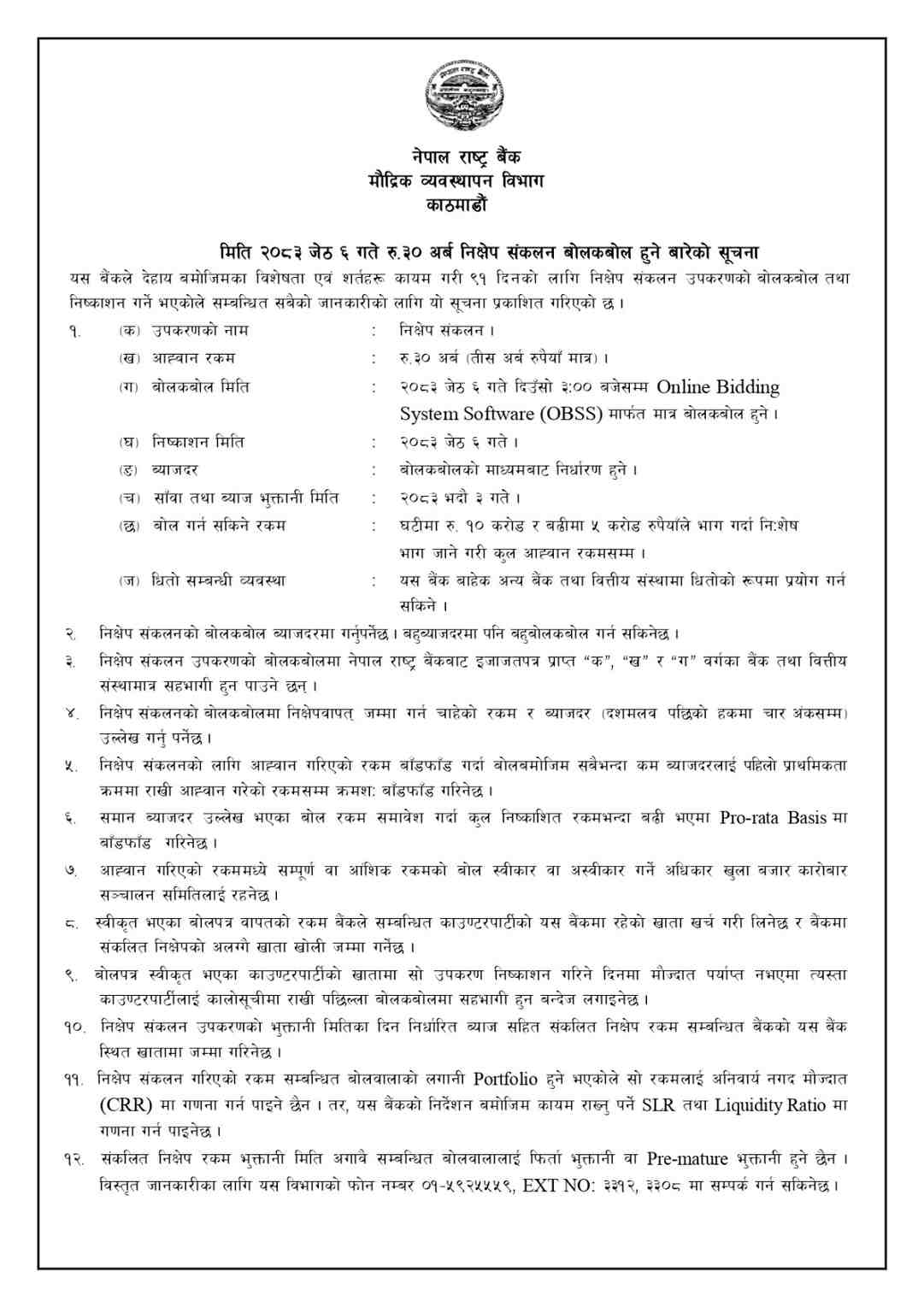
Nepal Rastra Bank to Absorb Rs 30 Billion from Banking Sector Today