
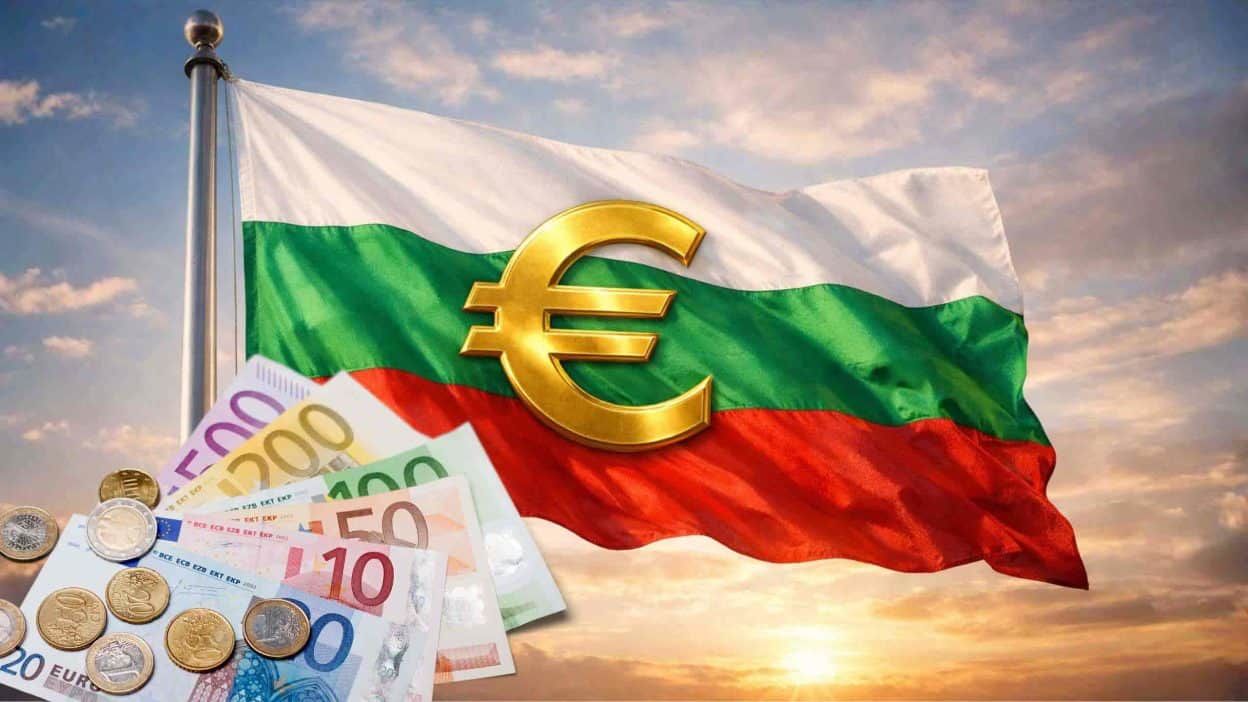
On January 1, 2026, Bulgaria will officially adopt the euro as its national currency, becoming the 21st member of the eurozone, the group of European Union nations that use the common currency. This follows years of economic planning, legal steps, and policy reviews to meet the criteria required for joining the euro area.
For people watching global economic trends, Bulgaria’s move highlights how countries integrate economically and politically with the broader European marketplace. It also underscores how shared currencies and economic unions continue to evolve decades after the euro’s introduction.
While the immediate impact on the U.S. economy may be limited, understanding these developments helps U.S. businesses and investors grasp bigger global currency, trade, and monetary policy trends.
Why This Is Happening
Bulgaria has long planned to adopt the euro. After joining the European Union in 2007, it committed to eventually replacing its national currency, the Bulgarian lev, with the euro. Over many years, the country worked to meet strict economic and legal conditions known as the convergence criteria, which are required for eurozone membership. These include stable inflation, sound public finances, and a reliable exchange rate mechanism.
In 2025, both the European Commission and the European Central Bank confirmed that Bulgaria fulfilled these conditions. EU finance ministers and the European Parliament also endorsed the final steps needed for the transition to occur at the start of 2026.
Current Economic Snapshot
| Category | Bulgaria’s Status |
|---|---|
| Population | About 6.4 million people |
| Currency transition | Lev → Euro |
| Eurozone membership | Becomes 21st member on Jan 1, 2026 |
| EU membership | Member since 2007 |
| Recent GDP trend | Managed moderate growth amid transition |
This transition comes nearly 20 years after Bulgaria joined the EU and two decades after the euro was first launched as a common European currency.
Why It Matters to Americans
For most Americans, Bulgaria’s euro adoption may seem distant, but it highlights broader economic themes:
Global Currency Trends: The euro remains one of the world’s most widely used currencies, and its expansion reinforces its global economic role.
Trade and Investment: U.S. businesses with ties to European markets may find trade and financial interactions influenced by currency stability and integration.
Economic Policy Lessons: Bulgaria’s experience shows how economic discipline, legal frameworks, and international institutions shape long-term monetary decisions.
While the U.S. dollar is the dominant global currency, changes in major currency unions like the eurozone can affect foreign exchange markets and global investment flows.
Comparing Before and After Euro Adoption
| Feature | Before Jan 1, 2026 | After Jan 1, 2026 |
|---|---|---|
| Bulgaria’s currency | Bulgarian lev | Euro |
| Exchange rate influence | National policy | ECB monetary policy |
| Price stability focus | Local | Eurozone-wide oversight |
| Integration with the EU economy | Strong | Stronger via euro participation |
Joining the eurozone moves Bulgaria closer to core EU economic structures, with shared monetary policy under the European Central Bank rather than national control.
Public Opinion and Domestic Concerns
Not everyone in Bulgaria welcomes the move. Recent surveys suggest that nearly half of the population is concerned about price increases and economic uncertainty that may come with the euro adoption. Critics also worry about losing national control over monetary policy and potential future political instability.
Supporters argue that the euro will bring long-term economic benefits, such as easier trade with other eurozone nations, reduced currency conversion costs, and greater appeal to investors seeking stability in the region.
Practical Takeaways
Euro adoption is a major policy milestone for Bulgaria and the EU.
Currency change is not automatic for all EU members; it requires meeting strict economic conditions.
American businesses and investors engaged with European markets should monitor how eurozone expansion shapes regional trade and currency dynamics.
Public opinion matters; shifts in sentiment could influence future economic approaches in Bulgaria and other countries considering euro membership.
Conclusion
Bulgaria’s accession as the 21st eurozone member marks an important point in its economic journey and in the evolution of European monetary integration. By switching from the lev to the euro, Bulgaria aims to strengthen its economic ties with the rest of the EU, reinforce policy stability, and benefit from the larger economic framework of the euro area. While domestic concerns and differing public views persist, the change reflects decades of preparation and cooperation with European institutions.
Frequently Asked Questions
What does it mean that Bulgaria is becoming the 21st eurozone member?
Bulgaria will switch from its national currency, the lev, to the euro, joining the other 20 countries that already use the euro and gaining equal status in the eurozone.
When does this change happen?
The transition is scheduled for January 1, 2026, when the euro will become Bulgaria’s official currency.
Why didn’t Bulgaria adopt the euro earlier?
Countries must meet specific economic criteria, including inflation control and budget stability, before joining the eurozone. Bulgaria met these requirements only recently.
Does this affect U.S. markets directly?
Not significantly in the short term, but eurozone changes can influence global currency markets and international investment flows.
Are Bulgarians unified about the change?
Opinions are mixed; some support greater economic integration, while others worry about price increases and loss of monetary control.
Bulgaria will adopt the euro on January 1, 2026, becoming the 21st member of the eurozone. The move reinforces its economic integration with Europe, though public concerns remain about prices and policy effects.